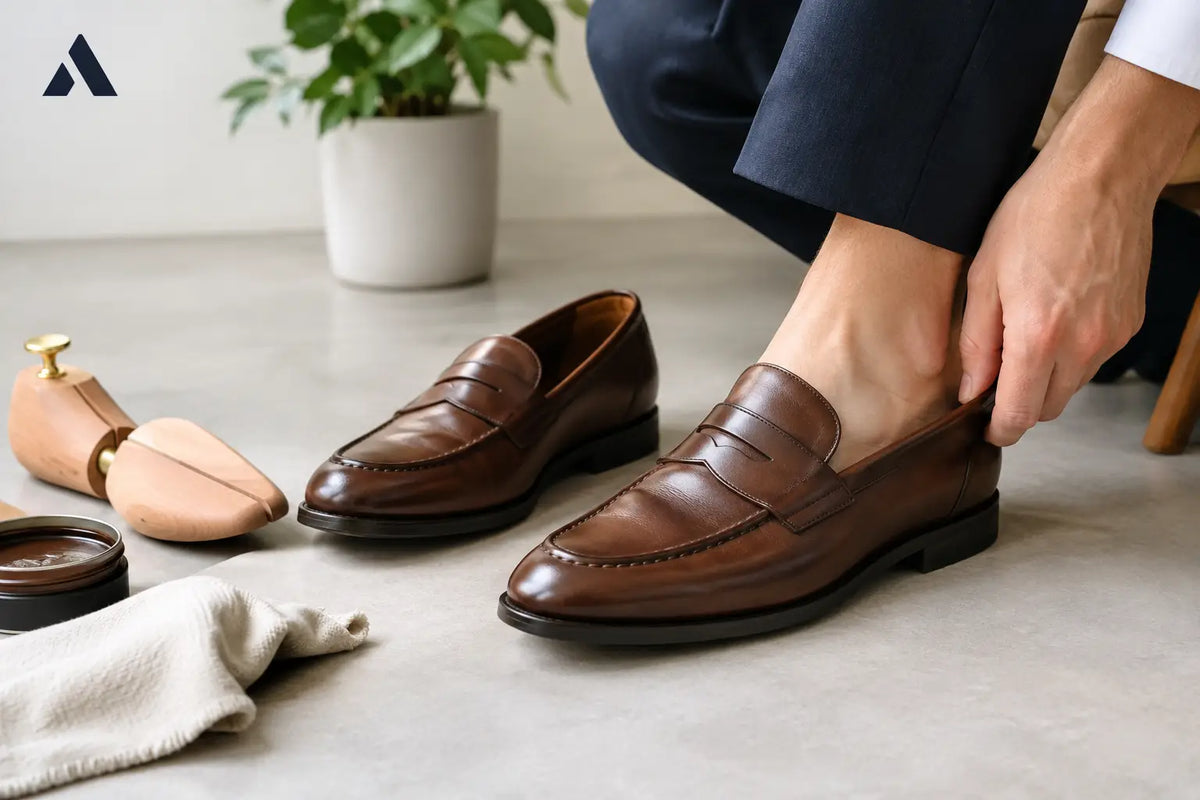
A great loafer should feel like an extension of your stride, not a test of endurance. To break in leather loafers properly, the goal is not to force the leather into submission. It is to introduce pressure gradually, let the material respond naturally, and preserve the clean structure that made you choose them in the first place.
Leather has memory. Treat it with patience, and it begins to contour around your foot while retaining its sharp silhouette. Rush it with long walks, heat, or aggressive stretching, and you risk blisters, loose heel counters, warped uppers, and a pair that loses its presence before it has earned its place in your rotation.
Start With the Right Fit
Breaking in is not a solution for a fundamentally wrong size. A new leather loafer can feel firm across the vamp - the upper section over the top of your foot - and slightly snug at the sides. That is normal. Your toes should not be pressed against the front, and your heel should not lift dramatically with every step.
A little resistance is expected. Numbness, pinching pain, or a toe box that crushes your toes is not. Leather can relax in width and mold around pressure points, but it rarely gains meaningful length. If the shoe is short, no break-in method will turn it into the right fit.
Try loafers on later in the day, when feet are naturally a little fuller. Wear the sock style you actually plan to use. A sockless look may call for no-show socks, while a more tailored outfit may need a thin dress sock. The smallest change in thickness can alter the fit enough to matter.
How to Break In Leather Loafers Gradually
The strongest method is also the least dramatic: short, controlled wears. Put your loafers on indoors for 20 to 30 minutes at a time for the first few sessions. Walk on clean flooring, sit, stand, and move through your normal motions. This lets you feel exactly where the shoe resists before you commit to a full day outside.
After two or three indoor sessions, wear them for a short errand, a dinner reservation, or a commute with limited walking. Build toward longer outings over the next week or two. The timeline depends on the leather, construction, and your foot shape. Softer leather often eases quickly; structured leather may need more deliberate wear but can reward you with a more refined fit over time.
Do not make a first wear a full day on your feet. A new loafer at an airport, festival, trade show, or long city walk is not a style move. It is a gamble. Bring a proven pair if your schedule leaves no room for discomfort.
Protect the Pressure Points Before They Turn Into Blisters
Most break-in pain happens in predictable places: the back of the heel, the top edge of the vamp, and the sides near the forefoot. Address those areas before friction gets a chance to build.
Use blister bandages or moleskin on your skin where you know shoes tend to rub. A thin pair of socks can also help for early at-home sessions, even if you intend to wear the loafers with no-show socks later. The added layer reduces friction while allowing the leather to begin shaping itself to your foot.
If the heel is the issue, heel grips can offer temporary cushioning and reduce slipping. Use them with restraint. They take up space inside the shoe, so they are best for a heel that moves slightly, not for a loafer that is already tight throughout.
For a specific tight spot across the forefoot or vamp, a professional shoe stretcher is the cleaner answer. A cobbler can target an area without distorting the rest of the shoe. This is especially worthwhile for leather loafers with a polished finish, pronounced hardware, or a structured profile that you do not want to compromise.
Condition the Leather, Do Not Soak It
Leather needs some flexibility to conform well, but oversaturating it is a shortcut with consequences. Avoid soaking your loafers in water, wearing them wet, or blasting them with a hair dryer. Heat can dry leather unevenly, damage finishes, weaken adhesives, and leave the upper stiff rather than supple.
A small amount of quality leather conditioner can help if the leather feels unusually dry or rigid. Apply it sparingly with a soft cloth, allow it to absorb, then buff away excess. The point is to support the leather, not make it slippery, dark, or overly soft.
Always test conditioner in an inconspicuous area first. Different leathers react differently. Smooth leather, suede, nubuck, and coated finishes each need their own care approach, and a product designed for one may alter the look of another.
Use Shoe Trees Between Wears
The break-in process does not end when you take the shoes off. Cedar shoe trees help loafers dry from daily moisture, reduce creasing, and maintain the shape of the vamp and toe box while the leather settles.
Choose trees that fill the shoe gently. They should support the upper without stretching it aggressively. A shoe tree is not a sizing tool. Its role is preservation - keeping the lines clean while your loafers develop a fit that feels personal rather than worn out.
If you do not have shoe trees, let the loafers rest in a cool, dry area between wears. Never leave them near a radiator, in direct sunlight, or sealed in a damp gym bag. Leather performs best when it has room to recover.
Know When to Stop Pushing Through
There is a difference between leather softening and your feet being punished. Stop wearing the shoes for the day if you feel sharp pain, tingling, hot spots, or a blister beginning to form. Pushing through usually creates more swelling, which makes the shoe feel tighter and turns a manageable fit issue into a frustrating one.
Give the affected area time to recover, then reassess the fit. If discomfort remains in the same exact location after several short wears, seek targeted stretching or consider whether the last - the form used to shape the shoe - simply does not suit your foot. Personal style is built on intention. There is nothing refined about forcing a shoe that does not work.
Keep the Finish Worth Wearing
Once your loafers begin to feel right, protect the result. Rotate them rather than wearing the same pair every day. Brush off dust after use, condition smooth leather only when it needs it, and store them with support. For suede or nubuck, use the proper brush and protective treatment made for that texture.
Loafers are built for controlled impact: clean lines, confident movement, and a profile that works from a sharp office look to a late-night reservation. The right break-in process keeps that balance intact. Let the leather adapt at its own pace, and soon the shoe will feel less like something you put on and more like part of the presence you carry.