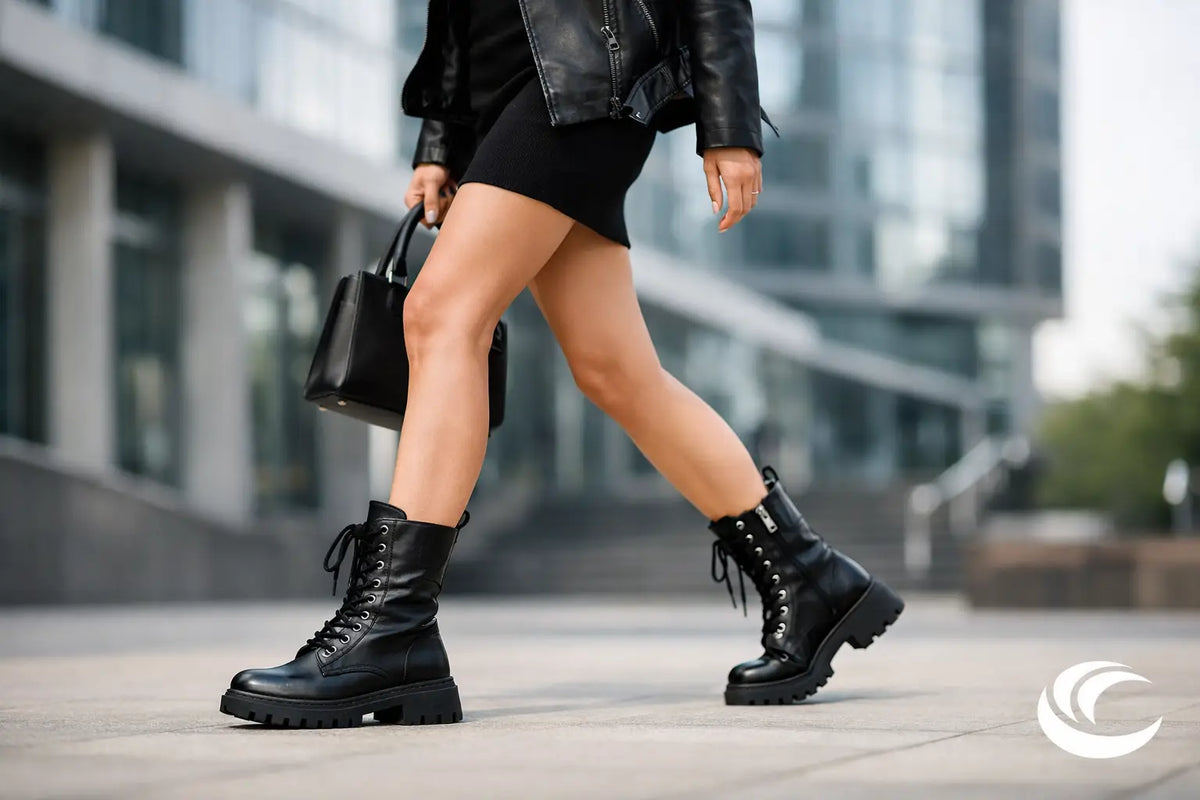
A sharp boot changes the temperature of an outfit. Combat boots women choose well do more than add edge - they give clean denim, fluid tailoring, and simple dresses a stronger point of view. The difference is not whether the boot looks tough. It is whether it looks intentional.
The right pair carries weight without feeling costume-driven, balances structure with comfort, and earns its place far beyond a single trend cycle. Think of it as footwear built for presence: grounded, precise, and ready to make the rest of your wardrobe look more considered.
What Makes Combat Boots Worth Wearing
Combat boots began as utility footwear, but their current power is visual. Their laced front, substantial sole, and defined ankle create contrast. They bring control to soft fabrics, substance to minimal outfits, and a welcome break from overly polished footwear.
That versatility is the real investment. A sleek black pair can move from a coffee run to a late dinner without changing the entire character of your look. With a blazer and straight-leg trousers, they make tailoring feel modern rather than corporate. With a knit dress, they stop the outfit from drifting too sweet. With relaxed jeans and a fitted tee, they make the basics look deliberate.
Not every pair needs an aggressive lug sole or exaggerated hardware. In fact, the most wearable styles often hold back. A refined shape, deep black finish, and proportioned sole offer more range than a boot loaded with zippers, straps, and decorative buckles. Bold restraint has a longer lifespan.
How to Choose Combat Boots Women Will Actually Rewear
The best pair should feel strong at first glance and easy to reach for on an ordinary Tuesday. Start with silhouette, then assess the details that determine whether the boot supports your lifestyle or merely photographs well.
Choose the shaft height with your wardrobe in mind
Ankle-height boots are the most flexible. They work naturally with cropped denim, full-length trousers, mini skirts, and dresses. They are also easier to style when you want a clean, uninterrupted leg line.
Mid-calf combat boots make a bolder statement. Their higher shaft creates a more directional look with shorter hemlines, leggings, or tucked-in slim pants. They can be striking, but they require more intention around proportion. If your closet leans heavily toward wide-leg jeans and midi skirts, ankle height may give you more options.
Let the sole do its job
A substantial sole adds authority, but bigger is not always better. A thick platform can create dramatic height and visual impact, especially with oversized layers or compact silhouettes. The trade-off is weight and a more fashion-specific feel.
For daily wear, look for a sole with grip and a profile that feels substantial without overwhelming the upper. A slightly raised heel can improve posture and sharpen the boot's stance, while a flatter sole usually feels more casual and effortless. Consider the environments you move through most. Slick city sidewalks, long commutes, and evenings on your feet all ask more from a sole than a quick mirror check does.
Prioritize shape over excess detail
The toe shape changes everything. A round toe reads classic and versatile. An almond toe refines the look and pairs beautifully with tailored pieces. A squared toe feels architectural and more fashion-forward, though it may not suit every wardrobe.
Details should support the design, not compete with it. Matte hardware, tonal laces, and clean panels create a controlled luxury effect. Excess shine, oversized logos, and too many competing elements can limit how often you wear the boots. When the boot is already powerful, it does not need to shout.
Get serious about fit
Combat boots should feel secure at the heel, with enough room through the toe box to move comfortably. Your toes should not press the front when you walk downhill or take stairs. A little firmness around the ankle is normal with new structured footwear, but pinching, numbness, or sharp rubbing is not a break-in ritual worth accepting.
Try them with the socks you plan to wear most. A thin sock can make a borderline fit feel acceptable for five minutes, then punishing after an hour. If you are between sizes, the better choice depends on the boot's volume and lining. More room can often be managed with a thicker sock or insole; a boot that is too short rarely improves.
Styling Combat Boots Without Looking Overdone
The strongest outfits use contrast with discipline. Combat boots already bring visual force, so the rest of the look does not need to compete. Let texture, length, and proportion create interest instead.
With denim, start clean. Straight-leg jeans that skim the top of the boot look polished without trying too hard. A slight crop shows the shaft and keeps the silhouette crisp. For looser jeans, let the hem fall over the boot unless the shaft is slim enough to tuck neatly beneath it. Bunching fabric inside a wide boot can feel bulky fast.
With dresses and skirts, play against the boot's structure. A ribbed knit midi, slip skirt, or soft mini dress gains edge from a substantial sole. The key is balance. If the boot is tall and heavy, choose a hemline that creates visible space or a clean vertical line. If the dress has volume, a more streamlined boot prevents the outfit from becoming visually dense.
Tailoring offers another route. Combat boots under relaxed trousers signal confidence without relying on a heel. Keep the pants long enough to meet the boot cleanly, not so long that fabric pools on the sole. A fitted top, fine-gauge knit, or simple tank beneath a structured jacket keeps the look sharp.
For monochrome outfits, black combat boots are especially effective. They extend the line of dark trousers, anchor charcoal or espresso layers, and give an all-black look dimension through texture. Add metal jewelry or a precise watch sparingly. One clear accent is enough.
Break Them In Without Sacrificing Your Feet
New boots should become yours gradually. Wear them indoors for short stretches first, then take them on brief walks before committing to a full day out. Lace them firmly enough to prevent heel slip, but not so tightly that pressure builds across the top of your foot.
A thicker sock offers protection during the first few wears, particularly around the heel and ankle. If one spot repeatedly rubs, address it early with blister protection rather than hoping it disappears. Leather and structured materials can soften over time, but they will not always change exactly where your foot needs them to.
Do not confuse discomfort with quality. A well-made, structured boot may need time to flex, yet it should still have a sound foundation of fit from day one. Presence looks better when you can walk with it.
Keep the Finish Sharp
Combat boots are designed to take on real life, but neglect has a way of making even a strong silhouette look careless. Wipe off dirt after wear, especially around the welt and grooves of the sole. Let damp boots dry naturally away from direct heat, which can stiffen or damage the material.
For smooth finishes, use an appropriate conditioning product occasionally to maintain suppleness, then buff gently with a soft cloth. For suede or textured materials, use a dedicated brush and protectant suited to the finish. Store boots upright or lightly stuffed so the shaft holds its shape. Small habits preserve the clean, intentional look that made you choose them.
At VALTRYXX, the point is never to dress louder. It is to dress with more command. Choose combat boots that feel aligned with your stride, then wear them often enough to make that confidence look effortless.