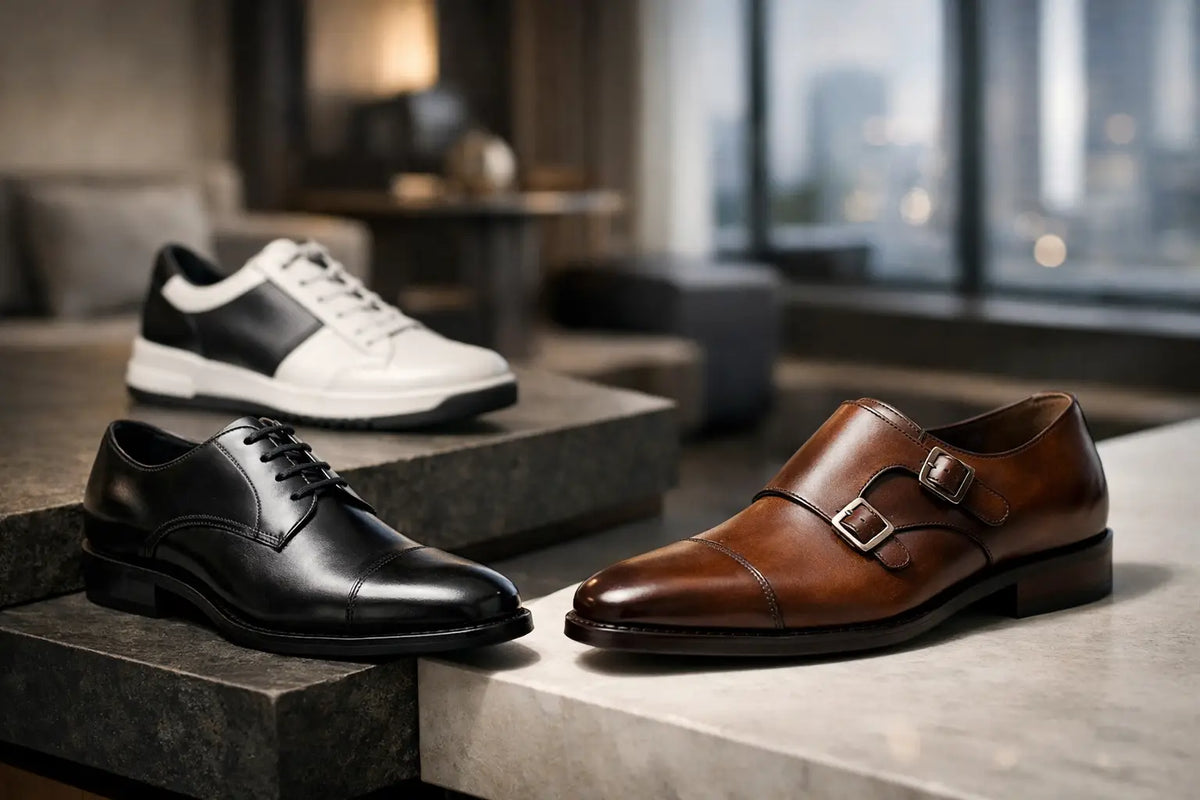
The first thing people register is rarely your watch or your jacket. It is your footwear. A clean silhouette, the right finish, and a confident stance can shift your whole look before you say a word. That is why designer mens footwear matters - not as decoration, but as a signal of control, taste, and presence.
The difference between average shoes and a strong pair of designer shoes is not just branding. It is proportion. It is restraint. It is the way the toe shape, sole height, texture, and profile work together to sharpen everything else you wear. The right pair can make simple clothes feel intentional. The wrong pair can flatten an otherwise polished fit.
What sets designer mens footwear apart
Designer mens footwear lives or dies on design language. Not logos. Not noise. Design language. The best pairs have clarity. They know what they are trying to say and they say it without excess.
That usually starts with silhouette. A low-profile sneaker with a sculpted sole gives off a different energy than a bulky court shoe. A sleek loafer communicates something entirely different from a heavy combat boot. Good design does not try to be everything at once. It picks a lane and executes with precision.
Materials matter too, but not in the shallow way people often discuss them. Premium-looking footwear is not only about using leather or suede. It is about surface consistency, edge finishing, stitching discipline, and how the upper meets the sole. A shoe can use expensive materials and still look confused. It can also use more accessible materials and still feel elevated if the shape and finish are right.
That is the real appeal for style-driven buyers. You are not chasing old luxury codes for the sake of prestige. You are choosing footwear that looks intentional, modern, and built for visual impact.
The three traits that make a pair look expensive
Some shoes look elevated from six feet away. Others need a close-up and a brand name to make their case. If you want stronger style returns, focus on the details visible at a glance.
The first is a refined shape. This does not always mean slim. It means balanced. The toe should not be too round, too long, or aggressively square unless the rest of the shoe supports that choice. A good shape feels deliberate.
The second is finish. Clean panels, controlled stitching, and a sole that looks integrated rather than stuck on all help a shoe read as premium. Matte and polished surfaces can both work. What matters is consistency.
The third is restraint. Loud hardware, too many textures, and oversized branding can make footwear feel cheaper, even when the price says otherwise. Presence comes from confidence, not clutter.
Choosing designer mens footwear by lifestyle
The best pair for you depends on where your style actually lives. Not where you imagine it lives.
If most of your week moves between work, dinner, and casual social settings, refined sneakers usually deliver the strongest value. They are versatile, comfortable, and easy to pair with trousers, denim, and layered basics. The key is to avoid overly athletic shapes if your goal is elevated style. Look for clean uppers, subtle detailing, and a sole with enough structure to feel current.
If your wardrobe leans tailored or nightlife-focused, loafers and sleek slip-ons can carry more authority. They frame the ankle cleanly, photograph well, and work with cropped trousers, black denim, and monochrome fits. The trade-off is practicality. They are less forgiving in poor weather and less casual for all-day daily wear.
Boots are the power move. Chelsea boots, zip boots, and sharp lace-up styles add weight and presence to a look with very little effort. They also transition well across seasons. But proportion matters more here than anywhere else. A boot that is too chunky can overwhelm lean outfits. A boot that is too slim can look dated.
How to style designer mens footwear without forcing it
Strong footwear should anchor the outfit, not fight it. The easiest mistake is building a look that tries too hard to match the shoe’s intensity. If the pair is bold, keep the rest of the outfit clean. If the pair is minimal, use texture and fit elsewhere to add depth.
Monochrome styling is one of the most reliable ways to make footwear look expensive. Black shoes with black trousers create a long, uninterrupted line that feels sharp and controlled. White or off-white sneakers with tonal neutrals can feel equally premium, but they demand maintenance. Dirt breaks the illusion fast.
Cropped hems or tailored breaks help too. When pants bunch heavily over a good shoe, you lose shape. Let the footwear breathe. Show enough of it for the design to register.
Accessories should support the same visual standard. A clean watch, a minimal chain, or a restrained ring stack can reinforce the message without pulling focus. This is where a brand like VALTRYXX fits naturally - the strongest looks are rarely built around one statement piece alone. They come from alignment.
Fit is not optional
You can spot bad fit immediately, even if you cannot explain why the shoe looks off. Heel slip, toe crowding, awkward creasing, or a silhouette that flares out too wide all weaken the effect.
Designer mens footwear should feel secure through the midfoot, stable at the heel, and comfortable enough that you do not change your walk to accommodate the shoe. That last point matters more than people admit. If a pair looks sharp standing still but makes you move stiffly, it is costing you presence instead of adding it.
There is also a style trade-off here. Some sleek shoes run narrow because the shape is part of the aesthetic. If your foot is naturally wider, forcing that silhouette can work against both comfort and appearance. In that case, a slightly more structured or substantial profile may look better on you overall.
Color, finish, and what they communicate
Black remains the strongest choice for controlled luxury. It is direct, versatile, and difficult to make look unserious. Black leather or faux leather footwear carries edge. Black suede softens that edge and feels more fashion-driven, though it takes more care.
White sneakers project ease and modern polish when they are clean. They work well for spring and summer, and they pair naturally with neutrals, denim, and lighter layering. The downside is obvious. They require upkeep, and once they lose their crispness, the whole look slips.
Brown, taupe, and stone tones can look excellent in the right wardrobe, especially if you wear earth tones, cream, olive, or textured tailoring. But these shades are less forgiving if the design is weak. They need stronger styling discipline to read as elevated rather than safe.
High-shine finishes, embossed textures, and metal details can add edge in moderation. The keyword is moderation. If every surface demands attention, the shoe loses authority.
When trend matters and when it does not
Fashion moves fast. Good style should not.
Chunky soles, retro athletic references, square toes, hybrid dress sneakers - all of these have had their moment, and some still do. Trends are useful when they sharpen your existing style. They are a problem when they replace it.
A smart approach is to buy your base in timeless forms and let one or two pairs carry more trend energy. That gives you range without making your wardrobe feel disposable. A clean black sneaker, a sharp loafer, and a strong boot can cover most style scenarios. Then, if you want a fashion-forward sole shape or a more directional upper, add it with intention.
The same principle applies to price. Expensive does not always mean powerful. Some of the most effective footwear sits in the space between mass-market and heritage luxury - elevated enough to look premium, accessible enough to wear without hesitation.
The smarter way to build a footwear rotation
Most men do not need a huge collection. They need a disciplined one. A tight rotation creates consistency, and consistency is what makes personal style believable.
Start with a dark everyday sneaker that can move from daytime to dinner. Add a more formal option, usually a loafer or sleek dress shoe, for tailored moments and evening settings. Then bring in a boot with enough structure to add edge during colder months or sharper fits. From there, every extra pair should fill a real gap, not just a temporary impulse.
This is where shopping discipline pays off. Before buying, ask one question: does this pair strengthen the looks I already wear, or am I inventing a fantasy wardrobe to justify it? The answer saves money and usually leads to better style.
Footwear is not background. It is foundation. Choose pairs that look precise, feel intentional, and hold their shape in motion. When the shoes are right, everything above them gets sharper.