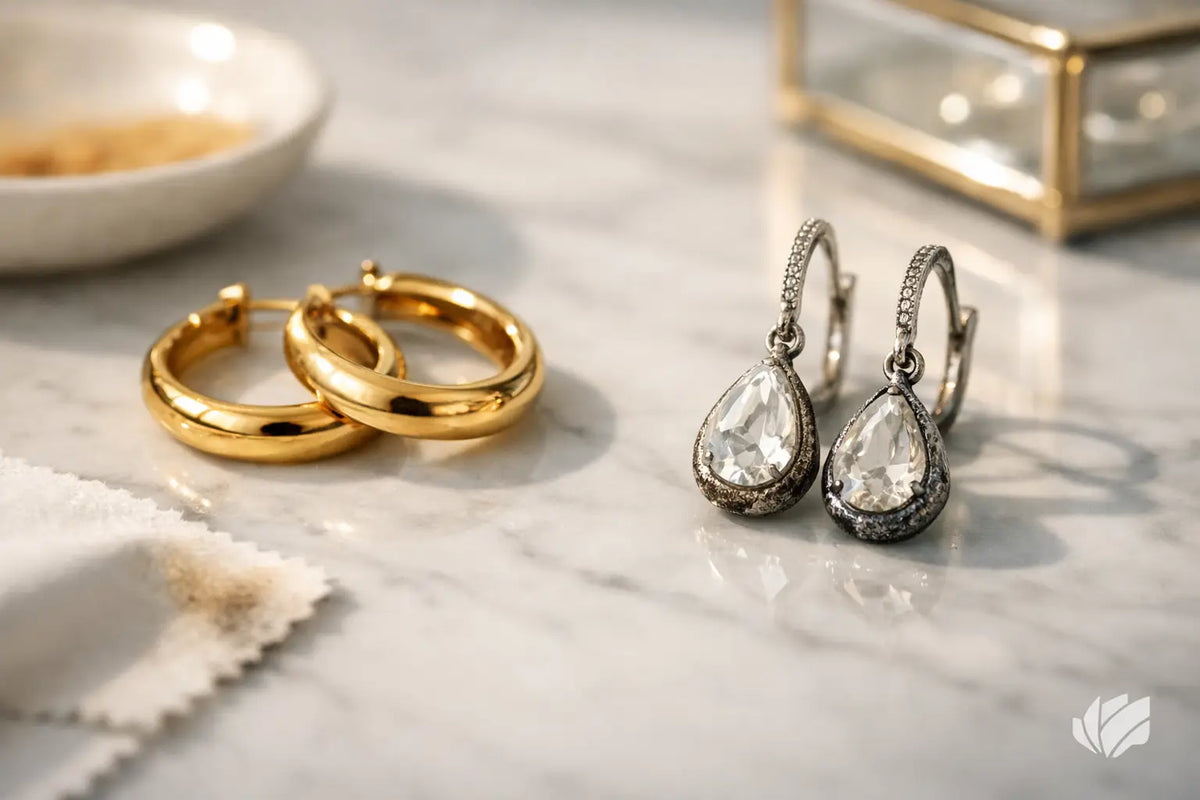
A clean pair of gold-toned earrings can sharpen an entire look in seconds. But do plated earrings tarnish quickly? Not necessarily. Quality plated earrings can hold their finish beautifully with the right wear and care, while others can lose their glow fast when exposed to moisture, chemicals, friction, and poor storage.
The real answer is not a simple yes or no. Plated jewelry is designed for style, accessibility, and impact, but its surface finish needs more intention than solid precious metal. Treat it like a part of your personal uniform, not something to leave on through every shower, workout, and late-night skincare routine.
Do Plated Earrings Tarnish Quickly? It Depends
Plated earrings have a base metal, such as brass, stainless steel, or another durable alloy, covered by a thin layer of gold, silver, rhodium, or another finish. That outer layer delivers the polished, luxury-coded look. Over time, it may fade, wear through, or react to the environment.
People often use the word tarnish for every change in jewelry color, but several different things can be happening. True tarnishing is a chemical reaction on the metal surface, often caused by sulfur, oxygen, humidity, or skin oils. Plating can also wear away from repeated rubbing, revealing the metal underneath. A third issue is residue: perfume, lotion, sunscreen, hairspray, and makeup can leave a dull film that makes earrings look less refined than they are.
How quickly that happens depends on the piece and the person wearing it. Someone with a high-sweat workout routine, an active job, or a skincare-heavy routine may see more wear than someone who reserves their earrings for dinners, meetings, and weekends out. Water quality, local humidity, and even your skin chemistry can change the timeline.
That is not a flaw in the idea of plated jewelry. It is the trade-off for getting a high-impact finish without the cost of solid gold. The key is choosing intentionally and wearing intelligently.
What Determines How Long the Finish Lasts
Not all plating is built to the same standard. The thickness of the plated layer matters, as does the metal beneath it and the process used to apply it. A very thin flash of color may look sharp at first but will naturally have less endurance than a thicker, well-applied finish.
The base metal matters, too. Stainless steel is generally a strong foundation for everyday accessories because it resists corrosion well. Brass is widely used in fashion jewelry for its weight and warm tone, but it can react more visibly when the plating wears down. If you have sensitive ears, the post material is especially worth considering. Look for details about hypoallergenic metals, surgical-grade steel, titanium, or other skin-friendly components when available.
Design also affects longevity. Smooth hoops and low-friction studs tend to experience less surface wear than pieces with moving parts, dangling charms, or tight closures that rub against the ear or one another. Statement earrings make a stronger visual move, but they may need a little more protection in storage.
Then there is how often you wear them. A pair worn five days a week will develop a different patina from a pair you save for events. Neither approach is wrong. Just match the piece to the role. Your everyday essentials should be durable, versatile, and easy to maintain. Your bolder plated earrings can be reserved for moments when the outfit needs more edge.
The Habits That Make Plated Earrings Fade Faster
The fastest way to compromise plating is to wear earrings through high-exposure routines. Shower water, pool chlorine, salt water, sweat, and steam all create conditions that can affect the surface. A quick swim may not destroy a pair, but repeated exposure adds up.
Fragrance and personal-care products are equally relevant. Apply perfume, hairspray, lotion, sunscreen, and makeup before putting on your earrings. Let those products settle first. Earrings should be the finishing detail, not the first thing you put on while getting ready.
Sleeping in plated earrings is another quiet source of damage. Pillow friction can wear at the finish, especially on hoops, huggies, and textured designs. It also increases the chance of bending posts, loosening backs, or catching a piece in your hair. Taking them off at night is a small reset that protects both the earrings and your ears.
Storage is where many good pieces lose their edge. Tossing jewelry into one open dish allows pieces to scrape against each other. Humid bathrooms are not ideal either. Keep earrings dry, separate, and protected from direct air exposure when possible. A soft pouch, lined box, or compartmentalized jewelry case is enough.
How to Keep Plated Earrings Looking Polished
Care does not need to become a ritual. It needs to be consistent. After wearing your earrings, wipe them gently with a soft, dry microfiber or jewelry cloth to remove skin oils and surface residue. Do not scrub aggressively, especially around edges, clasps, or engraved details.
If a pair needs more than a quick wipe, use a soft cloth that is barely damp with water, then dry the earrings immediately and completely. Avoid harsh jewelry dips, abrasive polishing cloths, toothpaste, alcohol, and household cleaners. Those methods may be appropriate for certain solid metals, but they can strip or scratch a plated finish.
A disciplined order of operations makes a difference:
- Get dressed, apply skincare, style your hair, and use fragrance first.
- Put on plated earrings last, once your skin and products are dry.
- Remove them before showering, swimming, working out, or sleeping.
- Wipe them down after wear and store each pair separately in a dry place.
When Discoloration Can Be Fixed and When It Cannot
A dull surface does not always mean the plating has failed. Sometimes the issue is simply a layer of product residue or skin oil. A gentle wipe can bring back much of the original shine. If earrings look cloudy after being stored for a while, start there before assuming the finish is gone.
If you see a different metal color coming through at high-contact points, however, that usually means the plating has worn away. This often appears around earring posts, clasp mechanisms, edges, and areas that rub against hair or skin. Cleaning will not replace missing plating.
Professional replating may be an option for a favorite pair with sentimental or exceptional value, though it is not always cost-effective for fashion pieces. For most style-forward collections, it makes more sense to rotate your earrings, care for them well, and replace heavily worn pieces when they no longer deliver the finish you want.
There is no need to treat a little wear as a failure. Jewelry is meant to be seen. But if your aesthetic is precise, clean, and elevated, knowing when a pair has reached the end of its best era is part of keeping your rotation strong.
The Best Way to Wear Plated Earrings With Confidence
Plated earrings are a smart choice when you want a refined finish, a bold silhouette, and room to experiment with your style. They let you build a versatile jewelry lineup: subtle studs for daily polish, sculptural hoops for after-dark presence, and statement pieces that take a minimal outfit somewhere sharper.
The expectation should be realistic. Plated jewelry is not indestructible, and it should not be treated like it is. Yet it also does not need to tarnish quickly. Choose pieces with thoughtful construction, keep them away from unnecessary exposure, and give them a clean place to live between wears.
A strong accessory does more than complete an outfit. It signals that you notice the details. Keep your plated earrings cared for, and they will keep doing what they were chosen to do: bring controlled shine, confidence, and precision to the way you show up.
The VALTRYXX jewelry collection is built on the same standard — clean lines, considered materials, nothing wasted.