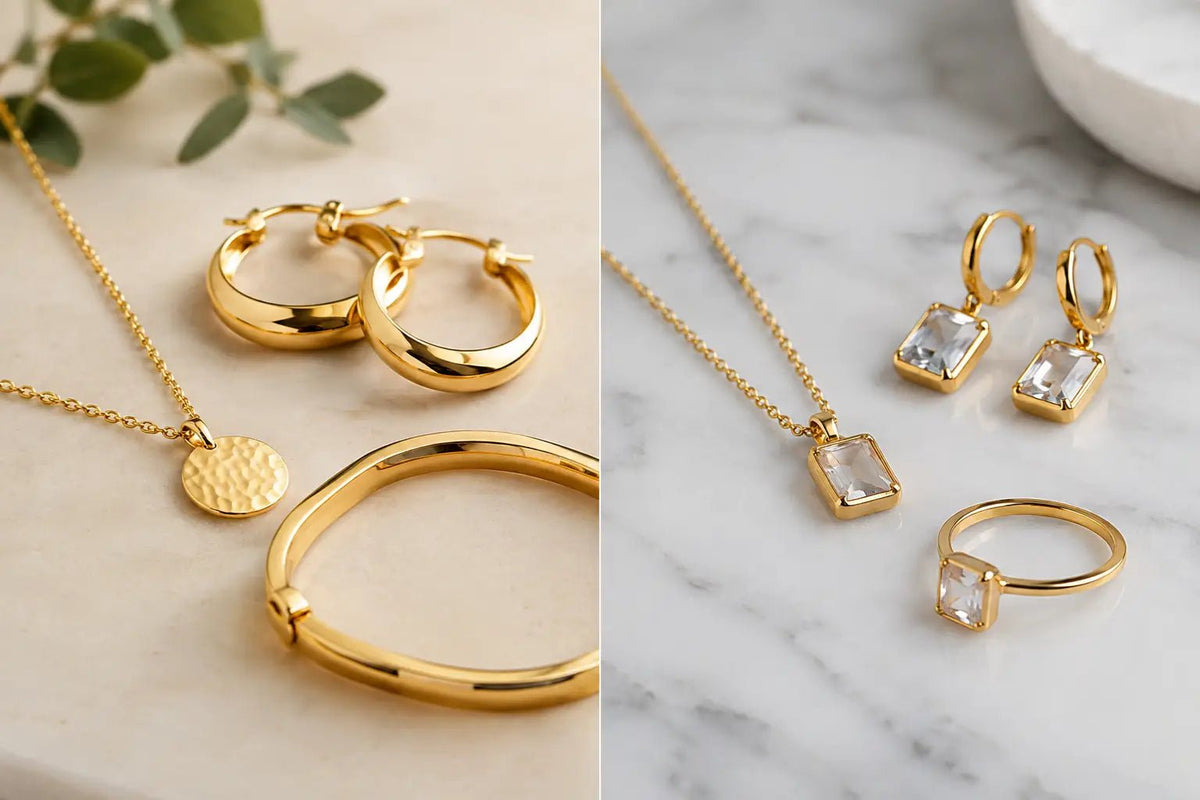
A gold finish can change the entire read of a look. It brings warmth to a black shirt, edge to a clean watch, and controlled impact to an otherwise minimal outfit. But when comparing gold plated versus vermeil jewelry, the difference is not just a line on a product page. It affects the base metal, the wearing experience, the price, and how long the piece keeps its finish.
The right choice is not automatically the most expensive one. It is the one that matches how you move: daily wear, occasional statement, sensitive skin, or a collection built around strong rotation pieces.
Gold Plated Versus Vermeil Jewelry: The Core Difference
Both gold-plated and vermeil jewelry have a layer of real gold on the surface. Neither is solid gold. The distinction lies underneath that gold layer.
Gold-plated jewelry can use many base metals, including brass, stainless steel, copper, or sterling silver. A process called electroplating bonds gold to the base metal, creating the gold appearance at a far more accessible price than solid gold. The thickness of that gold layer can vary widely, which is why two gold-plated pieces can wear very differently over time.
Vermeil, pronounced ver-may, is more specific. In the United States, gold vermeil is made with a sterling silver base and a gold layer that meets defined minimum standards. Generally, that means at least 10-karat gold and a plating thickness of at least 2.5 microns. That silver foundation is what separates vermeil from standard gold plating.
In plain terms: vermeil is a type of gold-plated jewelry with stricter material requirements. Gold plated is the broader category.
What You Are Actually Paying For
The premium on vermeil usually comes from the sterling silver beneath the gold. Sterling silver has inherent value, while brass and other common base metals are more cost-efficient. Vermeil also typically carries a thicker gold layer than entry-level plating, although thickness should always be checked instead of assumed.
That does not make gold-plated jewelry the lesser style choice. It makes it a different one.
Gold plating is built for fashion freedom. It allows bold chains, sculptural rings, layered necklaces, and statement sets to exist at a price that makes styling feel less precious. You can build a sharp rotation rather than treating every piece like an investment locked in a box.
Vermeil is often better suited to someone who wants a refined essential with a more elevated material foundation. Think of a clean signet ring, a close-to-the-skin chain, or earrings you expect to reach for repeatedly. The piece may cost more, but the underlying silver gives it a different level of substance.
The smart question is not, “Which one is better?” Ask, “What role does this piece play in my wardrobe?” A high-impact plated necklace reserved for nights out may be a stronger purchase than a vermeil version you are afraid to wear. Presence only works when you actually put it on.
Durability Is About More Than the Label
Gold does not vanish because a piece is called gold plated. Wear happens through friction, moisture, body chemistry, products, and contact with hard surfaces. The most exposed areas - ring bands, bracelet clasps, chain links, and pendant edges - usually show change first.
A thicker gold layer can offer more time before the base metal becomes visible. Vermeil often has an advantage here because of its minimum thickness requirement. Still, “vermeil” is not a promise of permanent perfection. Gold layers can wear down, especially when jewelry is worn in the shower, to the gym, while sleeping, or alongside abrasive metal pieces.
The base metal matters once wear begins. On vermeil, sterling silver may show through, creating a cooler-toned area that can often be professionally replated. On gold-plated pieces, the base could be brass, steel, or another metal. This does not necessarily affect the design while the finish is intact, but it can affect long-term maintenance and appearance.
Build quality also matters. A well-made gold-plated piece with secure closures, clean edges, and a protective finish can outperform poorly made vermeil. Material language deserves attention, but craftsmanship decides whether jewelry feels considered on the body.
The Skin-Sensitivity Question
For sensitive skin, vermeil can be an appealing option because sterling silver is the required base metal. But sensitivity is personal, and no category guarantees a reaction-free experience. Sterling silver is usually alloyed with other metals, while plating can wear over time and expose what sits underneath.
Gold-plated jewelry requires a little more scrutiny if skin sensitivity is a concern. Look for transparent material descriptions and avoid guessing about the base metal. Stainless steel is often valued for its durability, while brass is common in fashion jewelry for its weight and ability to hold detailed forms. Neither choice is universally right for every wearer.
The gold itself is also relevant. Higher-karat gold contains more pure gold, but it is softer. Lower-karat gold alloys are harder and can be more practical for a finish designed to hold up to regular wear. Technical details matter, but comfort is the final authority. If a piece irritates your skin, it does not belong in your rotation.
When Gold-Plated Jewelry Is the Better Move
Gold-plated jewelry earns its place when visual impact is the priority. It is an intelligent choice for trend-led silhouettes, occasion pieces, layered looks, and accessories that work best when you own more than one. A statement cuff, oversized pendant, or graphic set does not need a solid-gold price to command the room.
It also makes sense for anyone refining their personal uniform. You may want to test whether yellow gold suits your wardrobe better than silver tones, or whether a bolder chain actually fits your everyday presence. Gold plating gives you room to make those decisions through wear, not theory.
Minimalist luxury is not about buying the most expensive version of everything. It is about choosing pieces with intention. A clean gold-plated form, styled with restraint, can look more expensive than a cluttered collection of technically superior jewelry.
When Vermeil Is Worth the Upgrade
Choose vermeil when you want the feeling of a more substantial base material and expect consistent use. It is particularly compelling for timeless shapes that are unlikely to leave your rotation: a polished band, a fine chain, compact hoops, or a pendant with personal meaning.
Vermeil can also be a stronger middle ground for shoppers who want real gold and sterling silver without moving into solid-gold pricing. It carries more material value than typical fashion plating while remaining accessible enough for everyday luxury.
There is one practical caveat: sterling silver can tarnish when exposed to air and moisture, particularly where gold plating has thinned. This is normal, not a failure. With proper cleaning and occasional professional service, vermeil can remain part of a long-term collection.
How to Make Either Finish Last
Jewelry is not fragile, but it is not invincible. Treat your finish with the same discipline you bring to a good watch or well-kept shoes. Put jewelry on after fragrance, lotion, hairspray, and sunscreen have settled. Remove it before showering, swimming, training, or cleaning.
Store each piece dry and separately when possible. A soft pouch or lined compartment helps reduce scratches caused by chains, rings, and clasps rubbing together. After wear, wipe jewelry gently with a soft, dry cloth to remove oils and residue.
Avoid harsh polishing cloths or chemical dips on plated surfaces unless the maker specifically recommends them. They can remove the gold layer faster than expected. If a favorite piece eventually shows wear, ask a qualified jeweler about replating rather than retiring it immediately.
Choose for Your Rotation, Not the Label
Gold plated versus vermeil jewelry is not a battle between real and fake. Both use real gold. Both can deliver a polished, elevated finish. The difference is in the construction, the expected wear, and the kind of value you want from the piece.
Choose gold plated when you want flexibility, statement, and a stronger style rotation at an accessible price. Choose vermeil when sterling silver, a defined gold thickness, and long-term wear matter more to you. Then wear it with purpose. Luxury, without permission, starts with knowing what is on your skin and making it look like it belongs there.