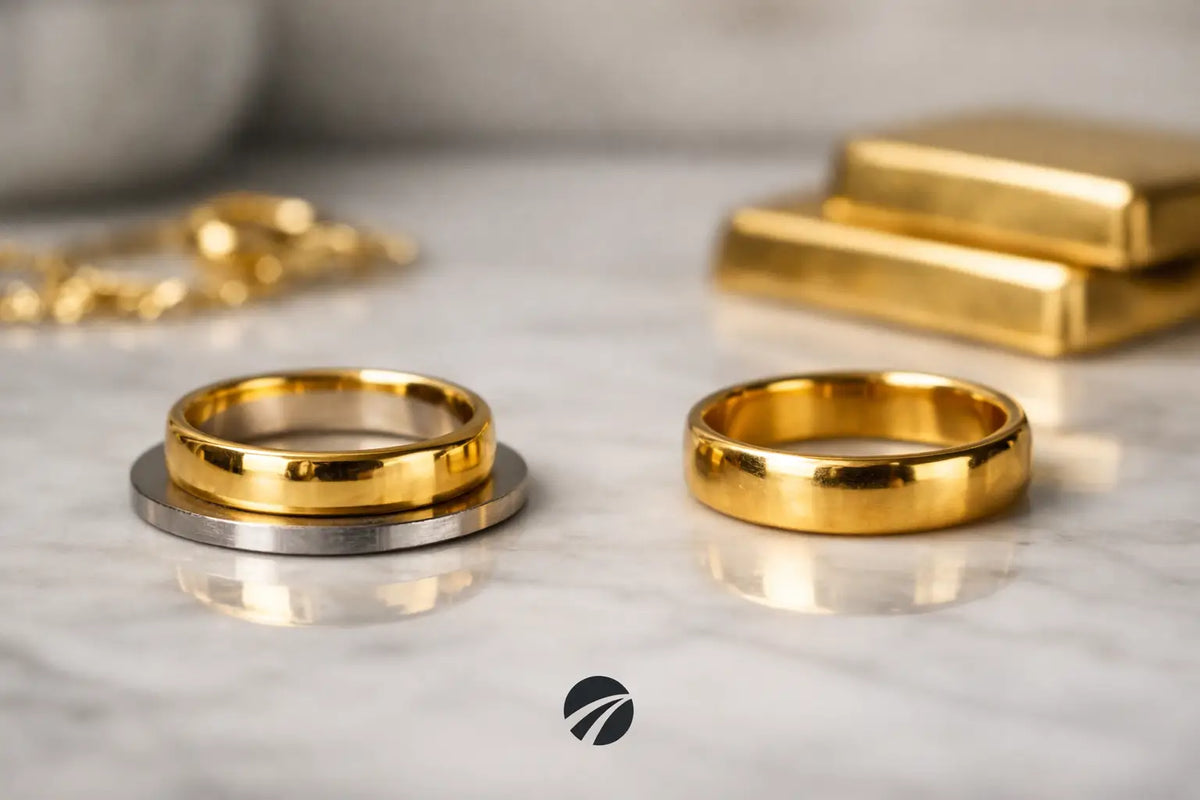
A gold chain can make a plain black tee look intentional. A slim ring can sharpen a watch-and-jacket combination without saying a word. But before the look comes the material question: gold plated vs solid gold. They may share the same warm finish at first glance, yet they are built for different standards of wear, ownership, and investment.
The right choice is not about chasing the most expensive option. It is about knowing what your jewelry needs to do. Is it a signature piece you wear every day? A high-impact accent for nights out? A layered part of a broader rotation? Your answer changes everything.
Gold Plated vs Solid Gold: The Real Difference
Solid gold is gold alloyed with other metals to create strength and wearable color. Pure 24K gold is soft, so most solid gold jewelry is made in 10K, 14K, or 18K. The number tells you how much of the metal is actual gold: 14K, for example, contains 58.3% gold. It is gold through and through, not a surface treatment.
Gold-plated jewelry has a base metal, often stainless steel, brass, or another durable alloy, covered by a thin layer of gold. That outer layer gives the piece its gold finish and its luxury-coded presence. Beneath it is a different core material.
That construction creates the central trade-off. Solid gold is made for long ownership and can be polished, repaired, and worn for decades. Gold plating delivers the visual language of gold at a far more accessible price, but it requires deliberate care because the finish can wear over time.
Neither option is automatically superior. A solid gold band makes sense when it will become part of your identity. A gold-plated statement chain may be the smarter move when your style is built around changing silhouettes, layering, and high-impact rotations.
What karats mean for solid gold
Karats affect both color and durability. Higher-karat gold has a richer yellow tone and more gold content, but it is also softer. Lower-karat options contain more strengthening alloys, making them better suited to daily contact and active routines.
For many people, 14K offers a strong balance: enough gold to feel substantial, enough durability to handle regular wear. Eighteen-karat gold reads warmer and more elevated, but it can show wear more readily. There is no universal best choice. A ring that meets gym equipment, steering wheels, and countertops all day has different demands than earrings worn for dinner.
Why Gold-Plated Jewelry Holds Its Own
Gold plating is not a shortcut when it is chosen with intention. It is a style tool. It gives you access to bold forms, sculptural links, layered chains, and coordinated sets without forcing every accessory purchase into heirloom-level spending.
That matters for a wardrobe built around presence. A collection of well-chosen plated pieces lets you change the temperature of an outfit. Keep it minimal with a clean pendant and a slim bracelet. Go harder with stacked rings and a heavier chain. Match the tone of your jewelry to the watch, footwear, or jacket that carries the look.
Gold-plated jewelry also makes more room for experimentation. You can try a new proportion or a more assertive silhouette before committing to a permanent version in solid gold. That freedom is valuable if your personal style is still evolving, or if you prefer a curated rotation over wearing the same piece every day.
Quality still matters. The thickness of the plating, the quality of the base metal, the finishing process, and the construction of clasps and settings all affect how a piece performs. A thoughtfully made gold-plated piece can look polished and hold its visual strength when treated correctly. The price should never be the only signal to follow.
The Case for Solid Gold
Solid gold carries a different kind of authority. It is not just about appearance. It is about permanence. Because the material runs all the way through, normal surface wear does not reveal a different-colored metal beneath it. Scratches can often be professionally polished, and many solid gold pieces can be resized or repaired depending on their design.
For an engagement ring, a daily signet ring, a meaningful pendant, or a piece intended to be kept for years, solid gold is often the stronger choice. It can become part of your uniform rather than another accessory in the drawer.
Solid gold also holds intrinsic material value. That does not mean every piece should be purchased as an investment. Craftsmanship, design, and resale conditions all matter. Still, gold has a value beyond its finish, while plated jewelry is primarily a fashion purchase. Buy solid gold because you want to own it for the long run, not because you expect an instant financial return.
The trade-off is cost. Solid gold can dramatically increase the price of even simple designs, especially with heavier chains, wider bands, or substantial links. If the same budget could buy one modest solid gold piece or several accessories that complete your daily looks, the best decision depends on how you actually dress.
Wear, Water, and the Reality of Daily Use
The question most people want answered is simple: will gold plating fade? Eventually, it can. Friction, sweat, lotion, fragrance, chlorine, saltwater, and repeated exposure to moisture can all wear down the outer gold layer. Rings and bracelets usually show this first because they experience the most contact.
Solid gold is more forgiving in this respect, though it is not indestructible. It can scratch, bend, and collect buildup. Higher-karat pieces deserve particular care. The difference is that surface wear on solid gold does not remove the gold itself.
If you choose plated jewelry, treat it as the finishing touch, not the equipment you live in. Put it on after skincare, fragrance, and hair products. Remove it before swimming, showering, training, or cleaning. Wipe it gently with a soft, dry cloth after wearing it, then store it separately so chains, rings, and clasps do not rub against one another.
This is not fussy behavior. It is how you protect the crisp color and clean surface that made you choose the piece. Precision has a payoff.
Consider your skin and your routine
Skin sensitivity is personal. Some people react to certain base metals or alloy components, while others can wear them comfortably. Solid gold, especially in a suitable alloy, may be a better long-term option for sensitive skin. Yet a quality plated piece with a skin-friendly base metal can work well for many wearers.
Your routine matters just as much. If you work with your hands, train often, spend a lot of time around water, or never take off your jewelry, solid gold is generally the more practical choice for core pieces. If you reserve jewelry for work, dinners, events, and polished everyday outfits, gold plating can offer exceptional visual value.
How to Choose Without Overthinking It
Start with the role of the piece. A minimal chain you plan to wear five days a week for years deserves a different budget than a bold cuff that appears when the outfit needs more edge. Frequency, friction, and sentiment are the three factors that should guide your decision.
Choose solid gold when the item is deeply personal, worn constantly, or intended to last across seasons of your life. Choose gold plated when you want to build range, test a new statement, or create a sharper look at an accessible price point.
A balanced collection is often the strongest answer. Keep one or two solid gold essentials close to the body: perhaps a ring, pendant, or everyday chain. Use gold-plated pieces to control the styling around them. This approach gives you permanence where it counts and flexibility where fashion moves fastest.
Do not confuse restraint with playing small. A clean gold finish, a strong watch profile, and footwear with purpose can carry more presence than an overloaded outfit ever will. VALTRYXX is built around that kind of controlled impact: pieces selected to make the full look feel deliberate.
Gold is not only a material decision. It is a decision about how you move through the room. Choose the piece that fits your routine, protect the pieces you value, and wear every detail like it belongs there.