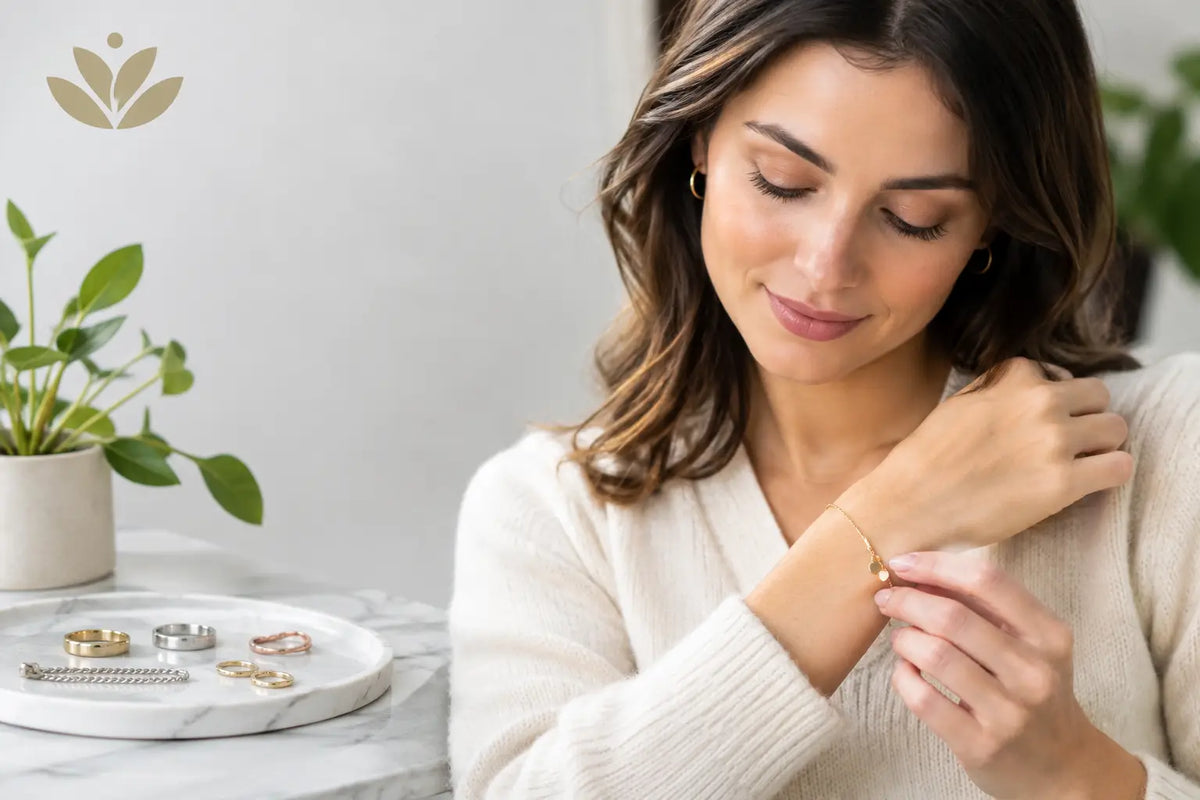
A clean metal watch, a sharp chain, a pair of sculptural earrings - jewelry should strengthen your presence, not leave your skin itchy, red, or irritated. This guide to jewelry metal allergies helps you read the signals, understand the materials, and choose pieces that fit your style without compromising comfort.
Metal sensitivity is common, but it is not always simple. A reaction may come from the base metal beneath a finish, friction from a tight fit, sweat trapped under a piece, or even product buildup. The goal is not to fear jewelry. It is to wear it with precision.
What a Jewelry Metal Allergy Actually Looks Like
The most common jewelry-related allergy is allergic contact dermatitis, often caused by nickel. Nickel is widely used in alloys because it adds strength, durability, and a bright finish. For sensitive skin, however, repeated contact can trigger an immune response.
The reaction usually stays close to where the jewelry touches the skin. Think itchy earlobes after wearing earrings, a rash under a ring, redness around a necklace clasp, or dry, cracked skin beneath a watch case or bracelet. Some people experience tiny bumps, burning, swelling, or skin that looks darker or more inflamed after the irritation fades.
Timing matters. A reaction can appear within hours, but it may also take a day or two. That delay makes the source harder to identify, especially if you rotate multiple accessories. If the same area flares each time you wear a particular piece, treat that as useful evidence.
Not every mark is an allergy. Green or dark discoloration can happen when metal reacts with sweat, skincare, or moisture. A tight ring can cause friction. Soap residue under a watch can create irritation. These issues still deserve attention, but they call for a different fix than a true metal allergy.
The Guide to Jewelry Metal Allergies: Know the Metals
Material language can sound more reassuring than it is. Terms such as gold tone, silver tone, plated, or hypoallergenic do not tell the full story on their own. What matters is the metal closest to your skin, the composition of the base, the quality of the plating, and how you wear the piece.
Nickel: the usual suspect
Nickel is the most frequent trigger. It can appear in mixed metals, clasps, earring posts, watch components, and plated jewelry beneath the outer finish. Even a piece that feels fine at first can become irritating once its surface coating wears down and exposes the metal underneath.
If nickel sensitivity is known or suspected, pay particular attention to items that sit against the skin for long periods. Rings, earrings, watches, bracelets, and necklaces are more likely to create problems than a pendant that barely touches the body.
Stainless steel: strong, but not identical across the board
Stainless steel is popular for its sleek appearance and everyday durability. Some grades contain nickel, though their construction may hold it more securely than other alloys. Many people with mild sensitivity wear stainless steel comfortably. Others do not.
This is where personal history matters more than a blanket rule. If steel watches or chains have bothered you before, do not assume a new steel piece will behave differently without testing it carefully.
Gold-plated jewelry: finish and care shape the experience
Gold plating creates the refined warmth of gold over a different base metal. It can be a smart choice for a luxury-coded look at an accessible level, but the plating is the barrier between your skin and that base metal. Over time, daily friction, sweat, water, fragrance, and lotions can thin the finish.
Well-maintained plated jewelry may feel comfortable for many wearers. If you have a strong nickel allergy, though, a plated finish is not a permanent guarantee. Inspect high-contact areas such as clasps, ring interiors, earring posts, and the underside of bracelets. When the finish changes color, looks worn, or feels rough, give the piece a break.
Sterling silver, gold, titanium, and other options
Sterling silver is typically an alloy, not pure silver, and can include other metals that matter for sensitive skin. Gold jewelry also varies by karat and alloy composition. Higher gold content may reduce exposure to other metals, but it does not automatically make every piece allergy-proof.
Titanium and niobium are often better tolerated by people with metal sensitivities, particularly for earrings and body-contact pieces. Platinum can also be an option, though it comes at a different price point. The right choice depends on your sensitivity, budget, desired finish, and how often you plan to wear the item.
How to Test a Piece Without Creating a Problem
Do not make a first wear an all-day commitment. Start with a short trial on clean, dry skin when you can monitor the area. Wear the piece for an hour or two, remove it, and watch for itching, heat, redness, or irritation over the next 48 hours.
Avoid testing immediately after shaving, exfoliating, or using strong skincare products. Freshly irritated skin is more reactive and can make a piece seem like the problem when the real issue is a compromised skin barrier.
For earrings, use extra caution. Pierced skin can become irritated or infected more easily than intact skin. If you have a history of reactions, choose your first test pair carefully and avoid sleeping in them.
A dermatologist can perform formal patch testing when reactions are persistent or unclear. This is the most reliable way to identify specific allergens, including nickel and other substances that may be present in jewelry, cosmetics, or everyday accessories.
Wear Jewelry Like It Was Designed for You
Comfort is part of polish. A strong look loses its edge when you are constantly adjusting a rash or removing a watch halfway through the day. A few disciplined habits make a real difference.
Keep jewelry dry whenever possible. Remove it before showering, swimming, training, or applying fragrance, hairspray, sunscreen, and body lotion. Sweat and moisture can accelerate wear on plated surfaces while increasing skin irritation under close-fitting pieces.
Clean your jewelry gently with a soft, dry cloth after wear. This clears away skin oils, product residue, and moisture without unnecessary abrasion. Store each piece dry and separated from harder items that can scratch its finish.
Fit is another overlooked factor. A bracelet or watch worn too tightly traps heat and moisture. A ring that spins, pinches, or presses into the skin creates friction. Choose a fit that feels intentional, not restrictive. Minimalist design looks most powerful when it moves with ease.
If you react to a necklace, do not assume the pendant is the issue. The clasp, extender, or chain may be the real source. With earrings, the post and backing can matter more than the visible front. Look at every component that makes direct contact.
When to Stop Wearing It
Remove the jewelry if you experience persistent itching, pain, swelling, blistering, weeping skin, or a spreading rash. Wash the area gently with mild soap and water, then let the skin recover before trying any accessories again. Scratching can worsen inflammation and raise the risk of infection.
Seek medical advice promptly if there is pus, intense pain, fever, rapidly spreading redness, or swelling around a piercing. These signs may point to infection rather than a straightforward allergic reaction. If a rash keeps returning, a dermatologist can help separate a metal allergy from eczema, irritation, or another skin condition.
Do not try to power through a reaction for the sake of a look. Presence comes from control. The right piece should feel as good as it looks.
Build a Collection That Respects Your Skin
Start by identifying your safest category. Maybe titanium earrings work without issue, while a particular watch clasp does not. Maybe you can wear plated chains for an evening but need a different material for daily use. Your collection does not need to be all one metal. It needs to reflect how your skin responds.
Reserve higher-contact pieces for materials you know you tolerate. Rotate fashion pieces rather than wearing them around the clock, and inspect finishes before they become visibly worn. Keep notes after a reaction: what you wore, how long you wore it, whether you exercised or used fragrance, and where the irritation appeared. Patterns reveal themselves fast when you pay attention.
Jewelry is an expression of intent. Choose the metal that lets you keep your focus on the room, the moment, and the impression you came to make.
To explore a personalized necklace, visit the VTX Sign — Custom Name Necklace product page. Review its material details before ordering; this link is not a claim that the necklace is nickel-free, hypoallergenic, or suitable for a particular metal allergy.