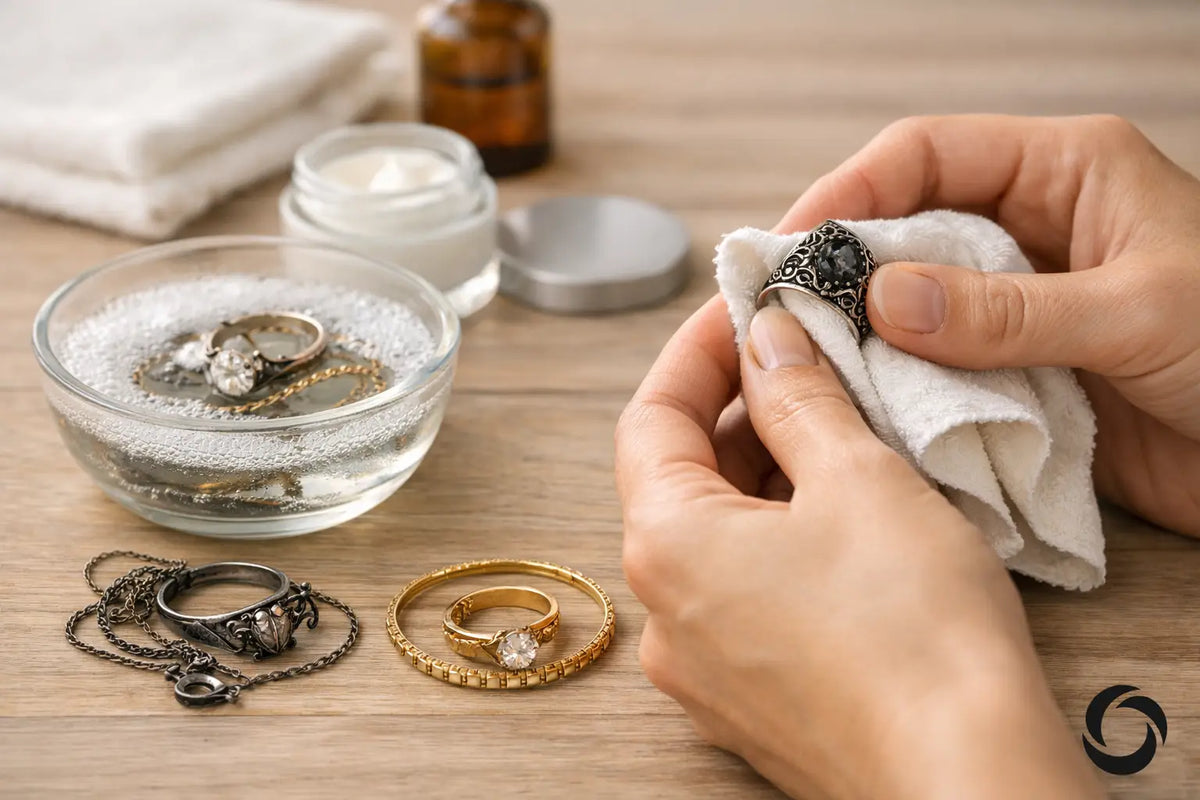
A darkened chain, dulled ring, or cloudy pendant can change the entire effect of an outfit. The right piece should catch light with intent, not look like it was forgotten in a drawer. Knowing how to polish tarnished jewelry is less about aggressive cleaning and more about control: use the right method for the material, protect the finish, and stop before a quick fix becomes permanent damage.
Tarnish is normal. It is the surface reacting to air, moisture, sweat, skincare, fragrance, and the everyday chemistry of being worn well. It does not automatically mean your jewelry is low quality or beyond saving. It means the piece needs a reset.
Why Jewelry Tarnishes in the First Place
Most tarnish appears when metal meets sulfur compounds, oxygen, moisture, or residue from products on your skin. Silver is especially known for developing a darker surface over time, while gold-toned, plated, and mixed-metal pieces may lose brightness because oils and product buildup sit on top of the finish.
Your routine matters. A necklace worn during workouts, a ring exposed to hand sanitizer all day, or earrings sprayed with hairspray will need more attention than pieces reserved for evenings out. Humid bathrooms and loose jewelry trays also speed up the process.
The goal is not to keep jewelry untouched. It is to keep it intentional. A little maintenance preserves the clean, elevated contrast that makes minimalist jewelry feel powerful.
First, Identify the Finish
Before you reach for a cloth or cleaning solution, know what you are handling. Solid precious metals can generally tolerate more polishing than plated jewelry. Gold-plated, silver-plated, vermeil, coated, or fashion jewelry needs a lighter hand because the visible finish is a surface layer. Too much friction can wear through it.
If a piece has crystals, pearls, enamel, glued stones, painted details, or a skeleton-style watch face, skip soaking it. Water can weaken adhesives, cloud delicate surfaces, or find its way into places it should never be. Watches deserve their own care plan unless they are specifically designed and rated for water exposure.
When you are uncertain, treat the piece as plated. The safest approach is usually the smartest one.
How to Polish Tarnished Jewelry Safely
Start with the lowest-impact method: a clean, dry, nonabrasive microfiber or jewelry polishing cloth. Hold the piece securely and rub in small, controlled motions. Do not press hard. You are lifting surface residue and restoring shine, not sanding the metal into submission.
For light tarnish, this may be all you need. Work slowly around chains, clasps, edges, and settings, then inspect the piece under good light. A soft cloth is particularly effective for jewelry that looks dull rather than deeply discolored.
If residue remains, use a barely damp soft cloth with a tiny drop of mild dish soap. Wipe the metal gently, then remove soap with a separate cloth dampened only with clean water. Dry immediately and completely with another soft cloth. Never leave a piece wet on a counter, especially if it includes plated surfaces or stones.
For solid sterling silver with heavier tarnish, a silver-specific polishing cloth can be effective. Follow the cloth directions and avoid using it on plated pieces unless the manufacturer confirms it is safe. Polishing compounds can be too aggressive for delicate coatings, even when the result looks great at first.
A useful rule: if the finish begins to look uneven, lighter in one area, or slightly coppery underneath, stop polishing. That is not tarnish lifting away. That is the plating wearing down.
What Not to Use
Kitchen-counter hacks can be tempting, but many create more problems than they solve. Toothpaste is abrasive. Baking soda can scratch. Lemon juice and vinegar are acidic, which may damage finishes, stones, and settings. Paper towels feel soft, but their fibers can leave fine scratches over repeated use.
Avoid bleach, household cleaners, hand sanitizer, acetone, and ultrasonic cleaners unless you know the exact material and the cleaner is approved for it. Strong chemicals may strip coatings, weaken adhesives, and alter the appearance of decorative details.
The fastest method is not always the best method. Jewelry built for presence should be cared for with precision.
A Better Method for Chains, Rings, and Statement Pieces
Different silhouettes collect grime differently. Fine chains trap product buildup between links, so lay the chain flat on a soft cloth and work section by section. Do not pull or twist it while cleaning. For tight areas near a clasp, use a dry, ultra-soft brush with minimal pressure rather than forcing a cloth into the gap.
Rings collect residue underneath the setting and around the band. A slightly damp cloth is usually enough for plated rings. For solid metal rings without delicate stones, a soft brush lightly moistened with mild soapy water can help, but keep the process brief and dry the ring thoroughly.
Statement earrings and pendants need restraint. Their visual impact comes from crisp surfaces and defined details. Clean broad metal sections with a soft cloth, then use a dry cotton swab around textured areas. Keep moisture away from glued elements and backs where materials meet.
For pieces that have turned black, green, sticky, or visibly corroded, do not keep escalating the cleaning process at home. Green discoloration can signal a reaction involving base metals, moisture, or a failing finish. A professional jeweler may be able to assess the piece, but sometimes the strongest move is replacing a heavily compromised accessory rather than trying to force it back into form.
Make Tarnish Less Likely Between Wears
A polished piece can lose its edge quickly if it goes straight back into a humid room or lands loose beside other accessories. Storage is part of the look.
Keep jewelry dry, separated, and away from direct sunlight. A soft pouch or lined compartment helps prevent scratches and reduces contact with air. If you live in a humid area or store pieces for long stretches, anti-tarnish strips can help, particularly with silver-toned jewelry.
Put jewelry on after your grooming routine. Fragrance, lotion, sunscreen, hair products, and makeup should settle before your chain, bracelet, or earrings go on. Take jewelry off before showering, swimming, training, cleaning, or sleeping. These habits sound small, but they protect the finish far more effectively than emergency polishing.
After a long night out or a high-heat day, give your jewelry a quick dry wipe before putting it away. That 20-second ritual removes sweat and oils before they have time to build a dull film.
Build a Simple Care Routine
For jewelry worn several times a week, inspect it every two to four weeks. Wipe it with a dry microfiber cloth, check clasps and settings, and look for early signs of dullness. This keeps maintenance light.
Reserve deeper cleaning for visible buildup, not as a weekly habit. Over-polishing can be just as damaging as neglect, especially with plated jewelry. The ideal finish is bright and controlled, not scrubbed into submission.
If you rotate your collection, clean every piece before long-term storage. A chain that goes away dry and residue-free is far more likely to return ready for wear. This is especially true for bold gold-toned sets and pieces with polished, reflective surfaces where even a faint haze becomes obvious.
Your accessories do not need constant intervention. They need standards. Use a soft touch, avoid harsh shortcuts, and store every piece with the same intention you bring to wearing it. The result is jewelry that stays sharp, catches the light cleanly, and holds its place in the room before you say a word.