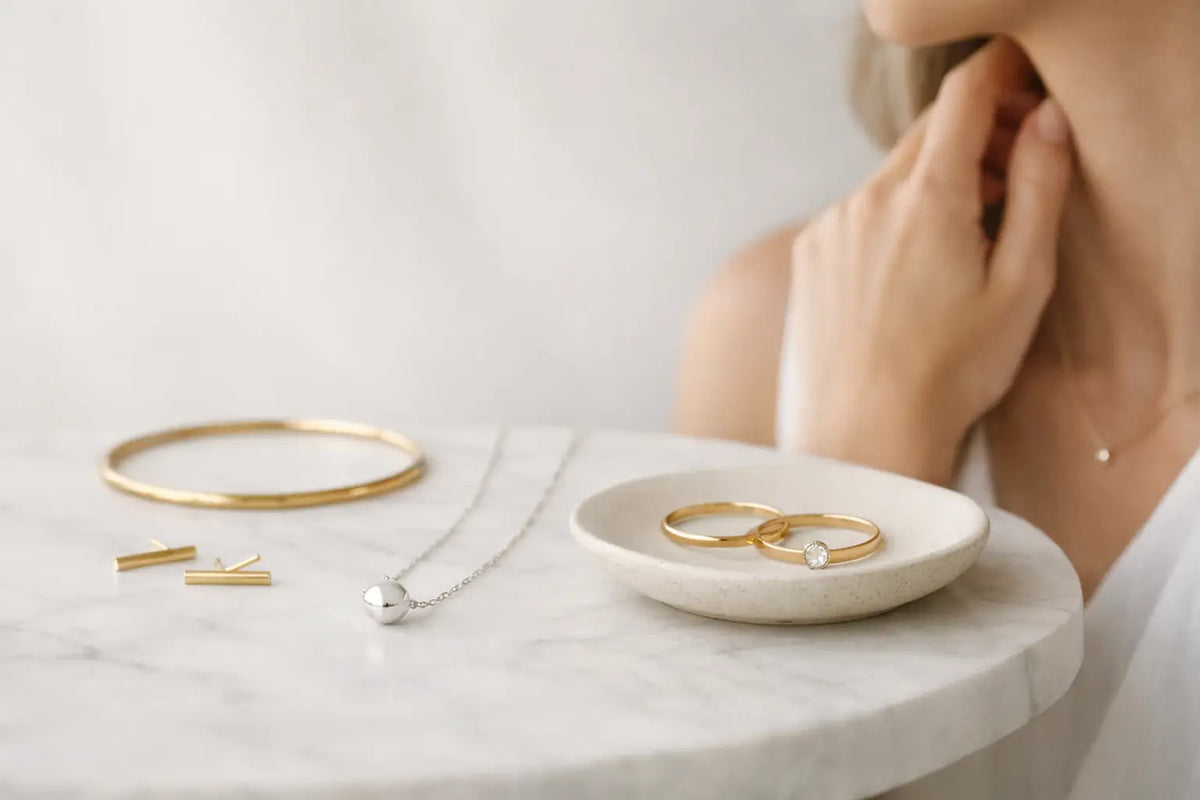
Minimalist jewelry gets noticed for what it leaves out. No excess. No visual noise. Just clean lines, balanced proportions, and enough detail to signal taste without trying too hard. If you have ever asked what is minimalist jewelry, the short answer is this: it is jewelry designed to make an impression through restraint.
That restraint is exactly why it feels powerful. A slim chain, a sharp cuff, a polished signet, a pair of understated hoops - these pieces do not compete with your look. They sharpen it. Minimalist jewelry is less about decoration and more about presence.
What Is Minimalist Jewelry in Fashion?
In fashion, minimalist jewelry refers to accessories built around simplicity, precision, and wearability. The design language is intentional. Shapes are clean. Surfaces are often smooth, polished, brushed, or subtly textured. Stones, if used at all, tend to be small, deliberate, and integrated into the design rather than dominating it.
That does not mean minimalist jewelry is plain. Plain is forgettable. Minimalist jewelry is controlled. Every curve, edge, clasp, and finish has a purpose. The best pieces look effortless, but that effect usually comes from disciplined design.
This is why minimalist jewelry works across settings. It can move from office to dinner, from daily wear to a night out, without feeling out of place. It carries a luxury-coded look because it relies on confidence instead of excess.
The Core Traits of Minimalist Jewelry
Minimalist jewelry usually shares a few defining qualities. It favors simple silhouettes over ornate patterns. It often uses a tight visual palette, such as gold, silver, black, white, or muted metallic finishes. It is designed to layer well, but it can also stand alone.
Scale matters too. Minimalist does not always mean tiny, and that is where people often get it wrong. A bold ring with a clean geometric profile can still be minimalist. An ultra-thin watch with a stark dial can feel stronger than a heavily detailed one. The key is clarity, not size.
There is also a difference between delicate and minimalist. Some minimalist jewelry is delicate, especially fine chains or slim stacking rings. But other pieces are architectural, sharp, and substantial. Minimalism is about editing, not shrinking.
Why Minimalist Jewelry Feels Luxurious
Luxury is not always about how much is added. Often, it is about what is refined. Minimalist jewelry tends to feel elevated because the focus shifts to finish, proportion, and materials. When a piece is simple, every detail is exposed. There is nowhere for weak design to hide.
That is why minimalist styles can look expensive even at accessible price points. A clean gold-plated necklace, a polished bracelet, or a strong black-accent ring can project the same visual discipline people associate with premium fashion. The message is clear: you know exactly how to present yourself.
For style-conscious buyers, that matters. Loud accessories can sometimes wear the person instead of the other way around. Minimalist jewelry reverses that. It supports your image rather than hijacking it.
What Minimalist Jewelry Is Not
Minimalist jewelry is not the same as boring basics. It is not low-effort styling. It is not a default choice for people who do not care about accessories. In many cases, it takes more taste to choose one strong piece than five distracting ones.
It is also not tied to one aesthetic tribe. Minimalist jewelry can look polished and corporate, dark and fashion-forward, soft and refined, or bold and modern. The same clean chain can work with a black suit, a white tee, a silk dress, or structured streetwear. That flexibility is part of the appeal.
At the same time, minimalism has limits. If you love heavy embellishment, oversized gemstones, or intricate vintage detailing, minimalist jewelry may feel too controlled. Style is personal. Minimalism works best for people who want their accessories to look intentional, sleek, and adaptable.
Why the Style Keeps Growing
Minimalist jewelry fits the way people dress now. Most wardrobes are more fluid than they used to be. The line between workwear, social wear, and everyday wear is thinner. People want fewer pieces that do more.
That makes minimalist jewelry a smart choice. It layers into different looks without asking for a full style reset. It photographs well. It feels current without looking trendy in a way that dates fast. And because it is less tied to seasonal decoration, it tends to have longer life in your rotation.
There is also a confidence factor. Minimalist jewelry signals control. It says you made a choice, not that you grabbed whatever was loudest. For an audience that values polish, presence, and visual discipline, that message lands.
How to Spot Quality in Minimalist Jewelry
Because the designs are simple, quality becomes more visible. The finish should look consistent, not patchy or dull. Edges should feel intentional, not rough. Closures should work smoothly. Weight should feel appropriate to the piece, whether it is a slim chain or a structured bracelet.
Materials matter, but context matters too. Solid gold, sterling silver, stainless steel, and gold-plated options all have a place depending on budget, wear frequency, and styling goals. Gold-plated jewelry can deliver a premium look at a more accessible price, but it may need more mindful care than solid precious metals. That is not a flaw. It is a trade-off.
If you wear the same pieces daily, durability should rank high on your list. If you rotate jewelry based on outfits or occasions, design impact may matter more than all-day wear resilience. The right choice depends on how you actually live, not just what sounds best on paper.
How to Wear Minimalist Jewelry Without Looking Flat
Minimalist styling works when there is enough contrast and intention. If every piece is too small, too similar, or too safe, the overall effect can disappear. The answer is not to pile on more. It is to create structure.
You can do that through proportion. Pair a slim necklace with a sharper ring. Wear clean hoops with a smooth cuff. Use one anchor piece and let the rest stay quiet. A monochrome outfit, a tailored jacket, or a dark watch can also give minimalist jewelry the right frame.
Texture helps. Polished metal against matte fabric creates tension. A sleek chain with a ribbed knit or a crisp shirt feels stronger than the same chain floating in a visually busy look. Minimalism depends on the full image, not just the accessory.
This is where brands like VALTRYXX align naturally with the category. The appeal is not excess. It is visual control. Pieces are built to sharpen a look, not clutter it.
Minimalist Jewelry for Men and Women
Minimalist jewelry crosses category lines easily because the design principles are universal. Men may lean toward signet rings, chain necklaces, cuffs, and understated watches with strong silhouettes. Women may gravitate toward layered necklaces, sculptural earrings, stackable rings, and refined bracelets. But the real divide is less about gender and more about styling intent.
Some people want barely-there elegance. Others want bold restraint. Both can fall under the minimalist umbrella. A thick, clean band ring can be minimalist. So can a thin pendant necklace. What matters is the purity of the design.
That range is one reason the category remains so relevant. Minimalist jewelry adapts to different identities without losing its core language.
Is Minimalist Jewelry Worth Buying?
If you want accessories that work hard across multiple outfits, yes. If you prefer trend-heavy pieces that change your whole look every season, maybe not. Minimalist jewelry delivers value through repeat wear, styling flexibility, and a polished image.
It also tends to age better visually than highly decorative trend pieces. That does not mean every minimalist design is timeless. Trends still show up in chain thickness, ring shapes, and watch proportions. But the category as a whole has more staying power because it is rooted in simplicity.
The strongest reason to buy it is not practicality alone. It is identity. Minimalist jewelry appeals to people who want to look composed, elevated, and deliberate. It is for those who understand that style does not need to shout to hold attention.
A good piece of minimalist jewelry does one thing exceptionally well: it makes your presence feel sharper. If that is the effect you want, you do not need more ornament. You need better choices.
Explore VALTRYXX's minimalist jewelry collection to build a rotation of clean, versatile pieces designed for everyday luxury.