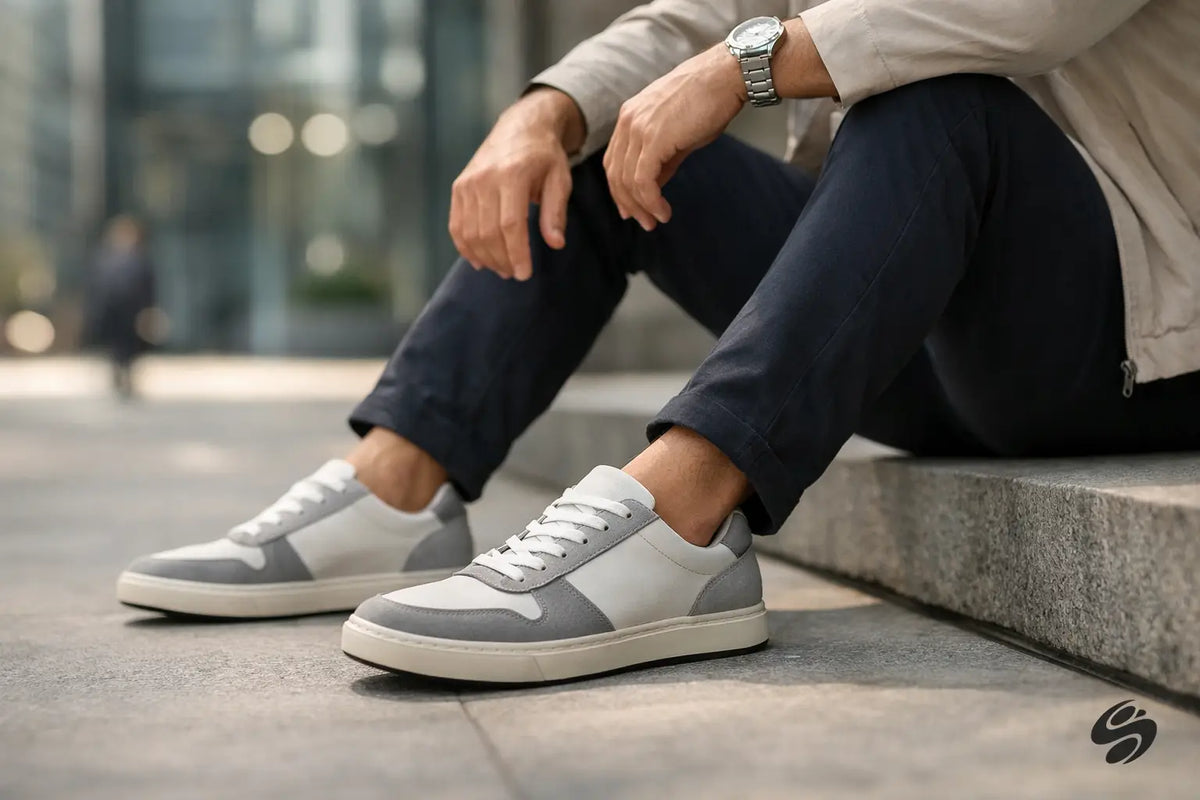
Mens casual sneakers are not an afterthought. They set the foundation for everything above them - the tailored trousers, the dark denim, the watch at your wrist, the way you enter a room. The right pair makes a casual look feel deliberate. The wrong pair can flatten an otherwise sharp outfit before anyone notices the details.
A strong sneaker rotation is not built around noise. It is built around control. Clean lines, decisive color choices, and a silhouette that holds its shape give you footwear with range. The goal is simple: a pair that looks composed on the street, at dinner, in a creative office, or after dark.
What Makes Men’s Casual Sneakers Feel Elevated
The difference between ordinary footwear and an elevated casual sneaker is usually restraint. A refined pair does not need oversized logos, exaggerated panels, or a dozen conflicting colors to get attention. It earns attention through proportion.
Look first at the silhouette. Low-profile sneakers with a balanced toe shape and a structured upper tend to work with more of your wardrobe than overly technical designs. They sit cleanly beneath tapered jeans and relaxed trousers alike. A slightly bolder sole can add presence, but it should support the shoe’s shape rather than dominate it.
Material changes the entire impression. Smooth leather or leather-look finishes bring a polished edge that canvas often cannot match. Textured panels, tonal stitching, and matte hardware can add depth without turning the shoe into a distraction. Lighter materials can feel more relaxed and breathable, while a denser upper usually looks sharper and more substantial. The better choice depends on where the shoe will spend most of its time.
Color is the final filter. White remains powerful because it creates contrast and keeps an outfit clean. Black delivers a more controlled, after-hours feel. Gray, cream, taupe, and deep brown offer quiet versatility for men who want something less expected without losing wearability. The strongest color is rarely the loudest one. It is the one that gives you more reasons to wear the pair.
Choose the Pair That Fits Your Actual Life
A sneaker can look perfect in a product photo and still be wrong for your rotation. Before buying, think about the environments you move through during a normal week. If your days go from commuting to meetings to dinner, a minimal leather-style sneaker in black, white, or off-white will usually carry the most weight. It looks intentional without reading as overly formal.
If your wardrobe leans toward darker denim, black trousers, overshirts, and metal accessories, black sneakers create a clean visual line from ankle to hem. This can make your frame look more composed, especially when the pants have a slight taper. Black does show dust and scuffs differently than white, however, so it rewards regular care.
White sneakers are more forgiving from a styling standpoint but less forgiving when neglected. They work with nearly every casual palette, from washed denim to olive cargos to tailored navy pants. Keep them clean and they project precision. Let the soles yellow or the uppers crease heavily, and the effect shifts fast.
A neutral pair in stone, gray, or cream is the middle ground. It can soften an all-black look or add sophistication to blue jeans and a fitted tee. These shades often photograph well and feel fashion-forward without demanding the rest of your outfit be built around them.
Fit Is Part of the Design
No amount of visual polish saves a sneaker that fits poorly. Your heel should feel secure without rubbing, while the forefoot needs enough room for natural movement. A shoe that is too narrow may look sleek at first, but pressure points become obvious after a few hours. A shoe that is too long creates a clumsy break at the toe and weakens the silhouette.
Try sneakers with the socks you actually wear. Thin dress socks, no-show socks, and athletic crews each change the fit. If you are between sizes, the material matters. Firmer uppers may require a little break-in time, while softer constructions can give more quickly. Do not assume every style will fit the same just because the size number is familiar.
Comfort is not separate from presence. When you are adjusting your footing, avoiding a blister, or thinking about your shoes all night, the outfit loses its authority. The best casual sneakers disappear physically while staying visible stylistically.
Build Outfits From the Ground Up
The most effective way to style sneakers is to decide what role they play. Are they the clean base beneath a statement jacket? Are they the tonal finish to a monochrome look? Or are they the one bright contrast against darker clothing? Once you know the role, the rest becomes easier.
With denim, keep the proportions disciplined. Slim or straight jeans with a clean hem allow low-profile sneakers to show their shape. Avoid heavy stacking around the ankle unless the shoe has enough visual weight to balance it. Dark denim and black sneakers create a more streamlined look, while mid-wash jeans with white or cream sneakers feel more relaxed.
With trousers, casual sneakers work best when the pants have intention. Cropped hems, a gentle taper, or a soft break keep the outfit modern. Pair black sneakers with charcoal, black, or deep olive trousers for a confident tonal direction. Pair white sneakers with navy, beige, or gray trousers when you want contrast without losing polish.
With shorts, the key is simplicity. A structured sneaker, a clean crew sock or no-show sock, and shorts that land above the knee create a sharper result than oversized footwear and long, baggy shorts. Let the sneaker feel like a design choice, not gym gear that happened to leave the house.
Accessories should reinforce the same language. A minimalist watch, a clean chain, or a sculptural ring can add definition to a sneaker-led look without competing with it. VALTRYXX is built around that kind of coordination: individual pieces that create more impact when worn with purpose.
The Details That Decide Whether a Pair Lasts
Casual sneakers take more daily impact than most shoes. Creasing, grime, sole wear, and odor can turn a strong pair into a weak one quickly. Care is not precious behavior. It is how you protect the look you chose.
Wipe the uppers after wear when dirt is fresh, especially on light colors. Use a soft brush around the sole edge, where buildup becomes most visible. Let shoes air out between wears rather than trapping moisture in a closed bag or closet. If you wear one pair constantly, rotate in a second option. Giving sneakers a day to rest helps them hold their form and extends the life of the interior.
Protect the shape, too. Do not crush the heel when slipping them on, and avoid storing them under heavier footwear. A casual sneaker with a collapsed collar or warped sole loses the controlled profile that made it appealing in the first place.
The Strongest Rotation Is Small and Intentional
You do not need a wall of shoes to dress well. For most wardrobes, two or three carefully selected pairs create more options than a crowded collection of trend-driven styles. Start with a clean white or off-white sneaker, add a black pair for depth, then consider a neutral tonal option if your wardrobe calls for it.
This approach gives you contrast, versatility, and enough separation between daywear and more polished evening looks. It also makes getting dressed faster. Instead of forcing a difficult pair into every outfit, you choose the sneaker that naturally supports the mood.
The right pair does not ask for attention. It takes its place, sharpens the line of the outfit, and lets your presence do the rest.