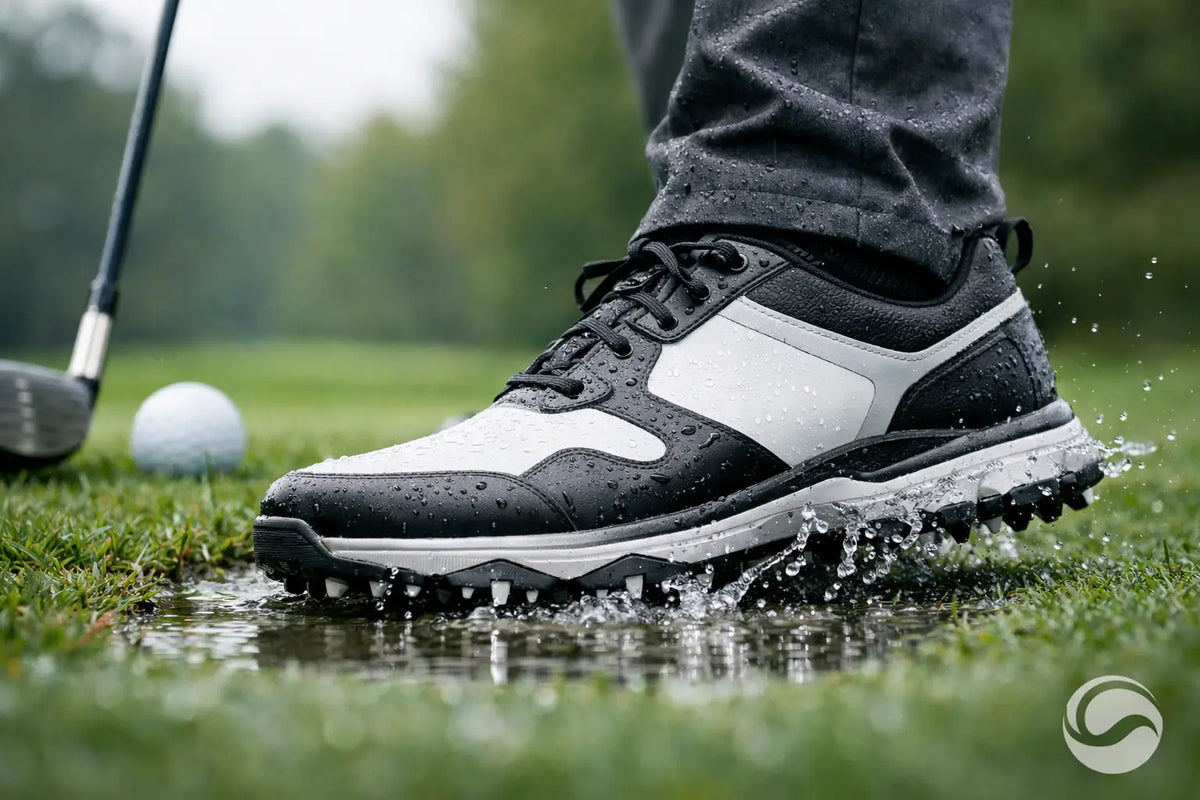
A wet fairway changes more than the scorecard. It changes your footing, your focus, and the way every step feels from the first tee to the final putt. The right waterproof golf shoes keep that pressure outside, where it belongs. Dry feet, a stable stance, and a silhouette that still looks deliberate - that is the standard.
Golf style has moved beyond the stiff, purely functional uniform. Your shoes should perform in bad weather without making the rest of your look feel like an afterthought. The strongest pairs bring protection, traction, comfort, and clean design into one controlled package.
Why Waterproof Golf Shoes Matter
Morning dew is enough to soak through ordinary footwear. Add soft ground, a surprise shower, or a long walk across a damp course, and moisture becomes a real distraction. Once your socks are wet, your feet can slide inside the shoe, your stride changes, and fatigue arrives earlier than it should.
Waterproof construction gives you a layer of control. A sealed upper or weather-resistant membrane prevents outside water from entering while allowing some internal heat and moisture to escape. That distinction matters. A shoe that blocks rain but traps sweat can still feel uncomfortable by the back nine.
There is also the matter of confidence. Golf requires a composed lower body. When the turf is slick, you need to trust that your lead foot will stay planted through rotation and that your trail foot will not lose ground at impact. Waterproofing does not create traction on its own, but it supports the conditions where dependable traction matters most.
Waterproof Is Not the Same as Water-Resistant
The terms are often treated as interchangeable. They are not.
Water-resistant shoes are built to repel light moisture. They may handle dew, a quick walk through damp grass, or a short drizzle. They are a smart choice for dry-climate golfers who want some weather protection without the added structure of a fully sealed shoe.
Waterproof shoes are designed for more serious exposure. Their materials, seams, and closures are made to keep water out during sustained wet conditions. If you play early, walk frequently, travel to courses with unpredictable weather, or refuse to cancel a round because the forecast turned gray, waterproof protection is worth prioritizing.
The trade-off is breathability. Full waterproofing can feel warmer than a lighter, water-resistant upper, especially in peak summer heat. That does not make it the wrong choice. It means the best pair depends on when, where, and how you play.
What to Look for Before You Buy
A sharp exterior earns attention. The details underneath determine whether the shoe deserves a place in your rotation.
Start With the Upper
Leather and synthetic uppers can both perform well, but they create different experiences. Treated leather offers a more elevated, traditional appearance and can develop character over time. It usually needs more consistent care to preserve its finish and weather protection.
Modern synthetic materials are typically lighter, easier to clean, and highly effective at keeping moisture out. For players who want a sleeker, more minimal look with low-maintenance performance, a refined synthetic upper is often the practical move. Look for a smooth finish, reinforced areas around the toe, and construction that does not appear bulky or overly technical.
Check the Seams and Tongue
Water rarely enters through the center of a quality upper. It finds the weak points: stitched seams, the tongue opening, and the collar around the ankle. Sealed or carefully reinforced seams offer stronger protection than a shoe that relies only on a water-repellent surface treatment.
A gusseted tongue is especially useful. It connects the tongue to the sides of the shoe, creating a more enclosed fit that helps block water, grass, and debris. It is a subtle feature, but on a wet course, subtle details separate polished performance from avoidable discomfort.
Choose Traction for Your Game
Wet ground asks more of the outsole. Spiked golf shoes generally provide the most aggressive grip, particularly on soft fairways, slopes, and rain-heavy courses. They suit golfers who generate speed, play in challenging conditions, or simply want the locked-in feel of visible traction.
Spikeless models offer versatility and a more understated profile. Their molded rubber patterns can deliver excellent grip in moderate conditions while moving easily from the course to the clubhouse. They are often more comfortable for walking and better aligned with a clean, modern wardrobe. In heavy rain or saturated turf, though, they may not match the bite of a well-designed spiked sole.
Fit Is Performance
Do not buy golf shoes with the same logic you use for casual sneakers. Your feet can swell over a long round, particularly when you walk. A fit that feels perfectly tight in a store or at home may become restrictive by the 14th hole.
Your heel should feel secure without rubbing. Your toes need enough room to spread naturally, but not enough that your foot slides forward during a downhill walk. Test the shoe by shifting your weight side to side and mimicking your golf stance. If the upper creases painfully across the forefoot or the heel lifts, keep looking.
For golfers between sizes, the better decision depends on the shape of the shoe and the thickness of the socks you wear. A slightly roomier fit can work with a structured insole or thicker performance sock. A shoe that is too short will not break in where it matters.
Build a Course-Ready Look
A weather-ready shoe does not need to look like expedition equipment. The cleanest golf footwear uses restraint: black, white, deep gray, muted earth tones, or a controlled contrast at the sole. These shades work with tailored pants, tapered golf trousers, technical shorts, and a sharp quarter-zip without pulling focus from the overall look.
White waterproof golf shoes remain a strong choice because they look crisp against dark pants and fresh green turf. The cost is maintenance. Mud, grass stains, and scuffs show quickly, so they reward players who clean their shoes after each round.
Black or dark-toned pairs offer a more commanding, low-maintenance option. They hide wet-course wear, pair easily with nearly every color, and carry a more controlled edge. If your style leans minimal and intentional, a dark waterproof shoe is difficult to beat.
Avoid choosing a pair solely for a loud logo, oversized color blocking, or a trend that will feel dated next season. Golf is a game of repetition. A shoe with a balanced shape and premium-looking materials will hold its presence long after the novelty fades.
Care That Protects the Investment
Waterproof shoes are not maintenance-free. Dirt and dried grass can wear down surface treatments, while heat can damage adhesives and stiffen materials. After a wet round, remove loose dirt with a soft brush or damp cloth, take out the insoles if they are soaked, and let the shoes dry naturally in a ventilated space.
Do not place them directly against a heater or leave them in a hot car. Fast heat can crack leather, warp components, and weaken the structure that keeps moisture out. If the shoes lose their water-beading finish over time, use a treatment made for the specific upper material.
Rotate pairs when possible. Giving golf shoes a full day to dry between rounds helps preserve comfort, reduce odor, and maintain their shape. It also means you are never forced to wear yesterday's damp pair when the next tee time arrives.
The Right Pair Changes the Round
The best waterproof golf shoes do not demand attention once you step onto the course. They simply keep you dry, stable, and ready to move with purpose when the conditions turn. Choose the pair that fits your climate, your walking habits, and your personal uniform - then let your swing take center stage.