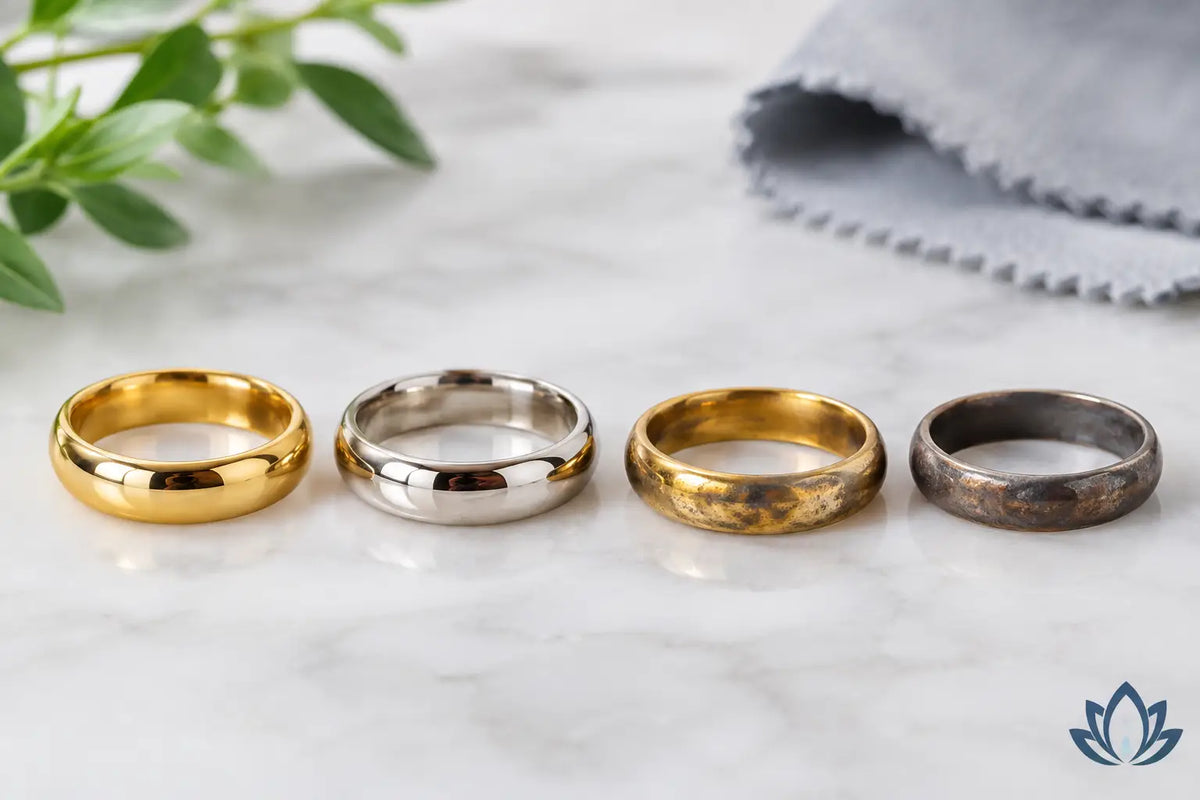
A plated ring can look flawless under a flash, then start losing its edge after weeks of everyday wear. That shift is not always true tarnish. So, why do plated rings tarnish? Usually, the visible change comes from a thin plated surface meeting friction, moisture, skin chemistry, and the realities of a full life.
Plated jewelry is built for presence. It delivers the rich tone and polished finish people want without the weight of solid precious metal pricing. But a plated ring needs intention. Understand what affects the finish, and you can keep it looking controlled, clean, and ready to be seen.
Why Do Plated Rings Tarnish or Change Color?
The word “tarnish” gets used for almost every change in a ring's appearance, but a few different things may be happening. True tarnish is a chemical reaction, often involving metals such as silver or copper in the base material. It can create dullness, dark marks, or a muted surface.
With plated rings, however, wear is often the bigger story. Plating is a thin layer of metal applied over a base metal. Gold-tone plating may sit over brass, stainless steel, copper, or another alloy. As that top layer slowly wears down, the metal underneath can become visible. The result may look darker, less golden, slightly reddish, or uneven around the edges.
Rings take more impact than most jewelry. They meet door handles, keyboards, gym equipment, steering wheels, countertop edges, and every hand wash in between. The underside of the band and the areas around raised details usually show wear first because they experience the most contact.
This is not necessarily a sign that the ring was poorly made. It is the trade-off of a fashion-forward plated finish worn often. A ring made for daily presence will naturally face more friction than a necklace brought out for dinner.
The Four Forces That Wear Down Plating
Plating does not disappear at the same speed for everyone. Two people can wear the same ring, and one may see changes much sooner. Daily habits matter.
Water and humidity
Water alone is not always the enemy, but repeated exposure creates opportunity for damage. Shower water, hand soap, dish soap, pools, hot tubs, and ocean water can leave residue or speed up reactions with the metals beneath the plating.
Chlorine is particularly hard on jewelry finishes. Saltwater can also be abrasive and leave deposits behind. Taking rings off before swimming is a small move that protects the look you bought them for.
Chemicals in everyday products
Hand sanitizer, lotion, fragrance, hair products, sunscreen, cleaning spray, and makeup all have the potential to affect a plated surface. Alcohol-heavy sanitizer can be especially drying or aggressive when used repeatedly, while lotions and oils can create buildup that makes jewelry look dull.
Apply your products first, let them settle, then put on your ring as the final detail. That order protects the finish and keeps the piece looking more intentional.
Friction and impact
No chemical reaction is required for friction to wear through plating. If you lift weights, work with your hands, move inventory, garden, cook frequently, or type with rings pressed against hard surfaces, the finish will face more abrasion.
A statement ring is designed to be noticed, not treated like indestructible equipment. Save it from tasks that demand grip, pressure, or repetitive contact. This is where styling meets strategy.
Your individual skin chemistry
Sweat, skin oils, and natural body chemistry vary. Higher acidity in sweat may cause some metals to react faster. Certain medications, dietary changes, and hormonal shifts can also influence how jewelry wears against the skin.
This does not mean you need to stop wearing plated rings. It means your care routine may need to be more disciplined. If you know your jewelry tends to change quickly, rotate your rings instead of making one piece carry every day.
The Finish Matters More Than Most People Realize
Not all plating is created equal. The durability of a plated ring depends on the thickness and quality of the plated layer, the metal underneath, and how the item is manufactured. A thicker layer generally provides more time before normal wear becomes visible, but no plated finish is permanent.
The base metal matters, too. Stainless steel can offer a strong foundation for jewelry, while brass and copper-based alloys may be more likely to show warm or dark undertones once plating wears thin. Some pieces also use protective top coatings that help reduce scratching and oxidation.
There is no single lifespan that applies to every plated ring. Occasional wear, careful storage, and low exposure to water can preserve a piece for years. Constant wear through workouts, showers, and cleaning sessions can shorten that timeline significantly. The right expectation is not perfection forever. It is a finish that stays sharp when treated with respect.
How to Keep Plated Rings Looking Sharp
The best care routine is not complicated. It is consistent. Remove your rings before showering, swimming, washing dishes, working out, or using household cleaners. Put them on after lotion, fragrance, and hair products have dried.
After wearing a ring, wipe it gently with a soft, dry microfiber cloth. This takes away skin oils and residue before they settle into the surface. If the ring needs more attention, use a slightly damp soft cloth with a small amount of mild soap, then dry it immediately and completely.
Avoid abrasive polishing cloths, harsh jewelry dips, toothpaste, baking soda, and rough brushes unless the product instructions specifically say they are safe for plated jewelry. These methods can remove the very layer you are trying to preserve.
Storage changes the game as well. Keep rings dry and separated so they do not rub against other jewelry. A soft pouch, lined compartment, or individual jewelry box space is better than letting pieces move together in one loose pile. Darkness and dryness help limit unnecessary exposure to air and humidity.
If you wear rings daily, rotation is one of the smartest moves you can make. A tight collection of different silhouettes gives every piece time off while keeping your style varied. Presence does not require wearing the same ring through every task on your calendar.
Can You Fix a Tarnished Plated Ring?
Sometimes, yes. If the issue is surface residue or mild dullness, careful cleaning can restore much of the original shine. If the plating has worn away and the base metal is exposed, cleaning cannot replace the missing finish.
Professional replating may be an option for a piece with strong sentimental value or a design you want to keep in rotation. Whether it is worthwhile depends on the ring's construction, the condition of the base metal, and the cost of the service. For fashion jewelry, replacement can sometimes be the more practical choice.
Be cautious with at-home “fixes” that promise instant restoration. A product that strips oxidation may also strip plating. If a ring has suddenly changed color, test only the gentlest cleaning approach first. Aggressive solutions often turn a manageable issue into permanent wear.
When a Ring Is Showing Its Age
A little softening in the finish does not always mean a ring is finished. Slight dullness can often be cleaned. But visible silver, coppery, or dark patches around the inner band, edges, or high-contact points usually indicate plating loss.
That is the moment to decide how the ring serves your wardrobe. Keep it for lower-impact occasions, have it replated if the design warrants it, or retire it and choose a new piece that matches your current standard. Jewelry should reinforce your look, not make you second-guess it.
A plated ring is an accessible expression of polish, not a disposable afterthought. Wear it with intention, protect it from the habits that wear it down, and let every piece in your rotation earn its place. The strongest style is not about owning more. It is about keeping what you wear looking deliberate.
The VALTRYXX jewelry collection is built on the same standard — clean lines, considered materials, nothing wasted.