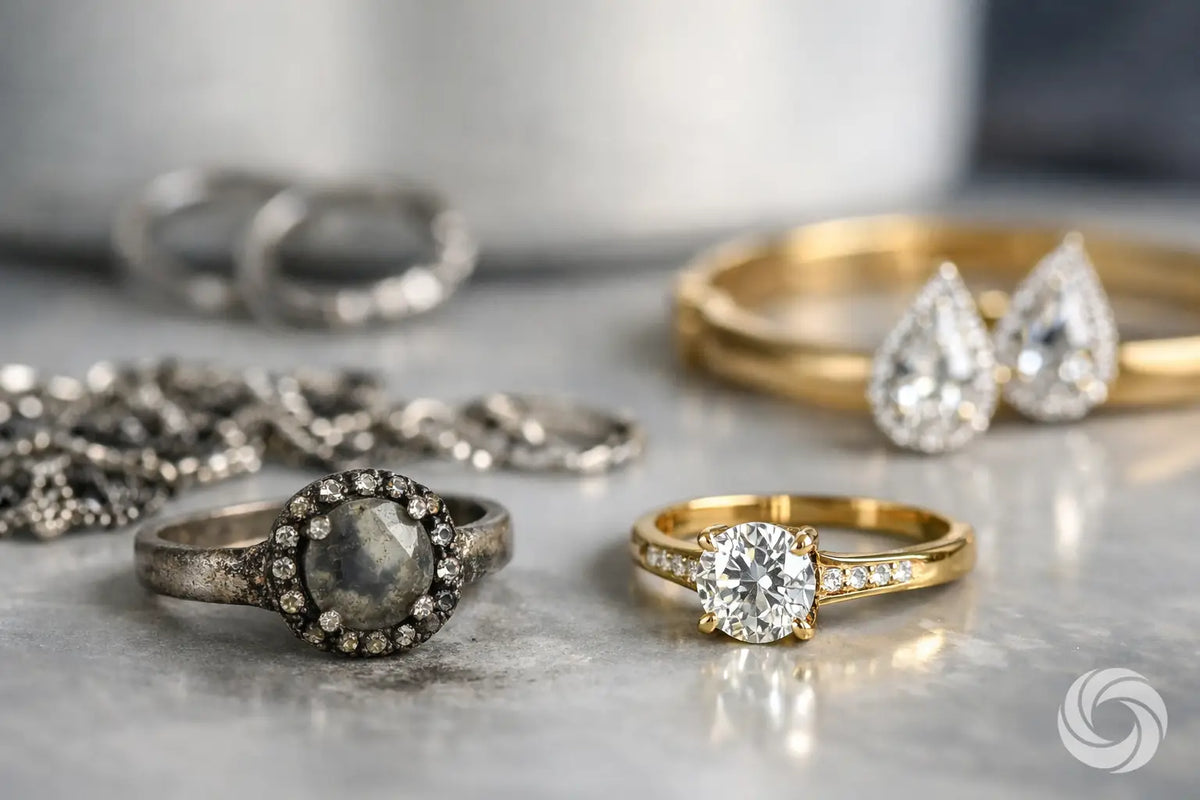
A clean chain, a sharp ring, a watch that catches light at the right angle - details like these set the tone before you say a word. But even a well-chosen piece can lose its edge over time. Understanding why jewelry tarnishes gives you control over how you wear, clean, and store the pieces that build your presence.
Tarnish is not a sign that your style has failed or that a piece is automatically low quality. It is chemistry. Metals react to their environment, and everyday life supplies plenty of triggers: air, moisture, body oils, fragrance, lotion, sweat, and even the materials in a jewelry box. The goal is not to treat jewelry like it belongs behind glass. It is to wear it with intention.
Why Jewelry Tarnishes in the First Place
Tarnish is a thin surface layer that forms when certain metals react with oxygen, sulfur compounds, moisture, or other substances around them. The result can look dull, gray, yellowed, darkened, or uneven depending on the metal and the reaction involved.
Silver is the classic example. Sterling silver contains silver mixed with other metals, often copper, for strength. Exposure to sulfur in the air can create silver sulfide, the darker film associated with tarnish. This is why a silver piece can look dramatically different after sitting unworn for months.
Copper and brass react easily, too. They may develop a deeper brown tone, dark spots, or, in some conditions, greenish oxidation. That green residue can transfer lightly to skin. It is usually a surface reaction, not a verdict on the piece or your skin. Still, it is a clear sign that the metal needs a reset.
Gold itself is highly resistant to tarnish. The complication is that most fashion jewelry is not solid pure gold. Gold-plated and gold-tone pieces use a layer of gold or a gold-colored finish over a base metal. Once sweat, friction, water, and product buildup begin wearing on that surface, the underlying metal can become more exposed and reactive.
Your Routine Has More Power Than You Think
The air around you matters, but your routine matters more. Jewelry is close to skin, and skin is not chemically neutral. Natural oils, sweat, and changes in skin pH can affect how quickly a piece changes color. One person may wear the same chain daily with no visible shift, while another notices dullness quickly. It depends on body chemistry, climate, and habits.
Humidity speeds up the process. Heat, coastal air, and a steamy bathroom create conditions that moisture-sensitive metals do not love. Sweat adds salts and acids. A hard workout, a long night out, or a hot commute can all leave a film on jewelry that slowly works against its finish.
Personal-care products are another major factor. Cologne, hairspray, body lotion, sunscreen, makeup, hand sanitizer, and cleaning products may leave residue or contain ingredients that react with metal surfaces. Your signature scent should stay on your skin, not settle into the links of your chain.
Chlorine deserves special caution. Pools and hot tubs can be harsh on jewelry, especially plated pieces and items with delicate settings. Household bleach and strong cleaners carry similar risk. A ring may feel like part of your uniform, but there are moments when taking it off is the more powerful move.
Gold-Plated Jewelry Needs a Different Standard of Care
Gold-plated jewelry delivers a high-impact look without the cost of solid gold, but it is not indestructible. Its lifespan depends partly on the thickness and quality of the plating, then heavily on how it is worn and maintained.
Friction is the silent threat. Bracelet stacks that constantly rub together, rings worn while lifting weights, and chains that catch against rough fabric can gradually wear down a plated finish. This does not mean you should avoid styling with confidence. It means you should know which pieces are built for daily contact and which ones deserve a more controlled rotation.
The same applies to watches. A metal watch can handle a lot, but sweat trapped beneath a bracelet, residue in the clasp, and exposure to water beyond its intended use can affect its appearance over time. Clean lines look better when the surfaces behind them are clean, too.
If you notice a gold-plated piece looking darker or less even, do not reach for aggressive polishing products. Many polishing cloths and chemical dips are designed for solid metals. On plating, they can remove more finish than they restore. Gentle care wins.
How to Keep Your Jewelry Looking Intentional
A few disciplined habits will do more than any last-minute rescue. Put jewelry on after your grooming routine, not before it. Give lotion, sunscreen, and fragrance a moment to settle before adding rings, necklaces, earrings, or a watch.
Take pieces off before showering, swimming, exercising, sleeping, or using household cleaners. Not every piece needs to come off for every ordinary task, and some durable materials are more forgiving than others. But water, sweat, and chemicals become a problem when exposure is frequent and residue stays on the surface.
After wearing a piece, wipe it gently with a clean, soft, dry microfiber or jewelry cloth. This removes skin oils and moisture before they have time to build up. Do not use paper towels, tissues, or rough fabric. They can leave fibers behind and may create fine scratches.
For a more thorough clean, use lukewarm water with a small amount of mild soap only when the piece's materials allow it. Wipe rather than soak, especially with plated jewelry, watches, glued stones, pearls, leather accents, or pieces with unknown construction. Dry completely with a soft cloth before storing. When in doubt, choose a dry wipe and avoid water.
Storage Is Part of the Look
How you store jewelry determines how it looks when you reach for it next week. Tossing everything into one drawer invites scratches, tangles, trapped humidity, and metal-on-metal friction. It also turns a clean accessory collection into visual noise.
Keep pieces separated in soft pouches, individual compartments, or a lined jewelry case. Store them in a cool, dry place away from direct sunlight and bathroom humidity. For sterling silver, an anti-tarnish pouch or strip can help slow oxidation during long periods of storage.
Do not seal jewelry away while it is damp. A necklace worn on a humid evening needs a quick wipe and time to dry before it goes back into its pouch. Small habits preserve the finish that makes a piece feel elevated.
When Tarnish Is Normal and When It Is a Warning
A little darkening on sterling silver is normal. A shift in tone on brass or copper is normal, too. These metals are reactive by nature, and some people even like the character that develops over time.
What deserves attention is peeling, flaking, deep discoloration, loose stones, rough edges, or a finish changing dramatically after very limited wear. Those issues can point to worn plating, improper exposure, or construction that needs professional evaluation. If a piece causes irritation, stop wearing it until you identify the cause. A clean, comfortable fit is nonnegotiable.
Tarnish can often be lifted. Worn plating cannot always be restored at home. Knowing the difference saves you from over-cleaning a piece in an attempt to force it back to its first-day finish.
Wear It Often. Maintain It Better.
Jewelry is meant to move with you - through meetings, dinners, flights, late nights, and the ordinary moments where personal style still matters. A little maintenance is not precious behavior. It is what keeps the details under your control.
Treat every chain, ring, watch, and statement piece like part of your visual standard. Keep it dry, keep it clean, store it with intention, and let the finish speak with the same precision you bring to the rest of your look.