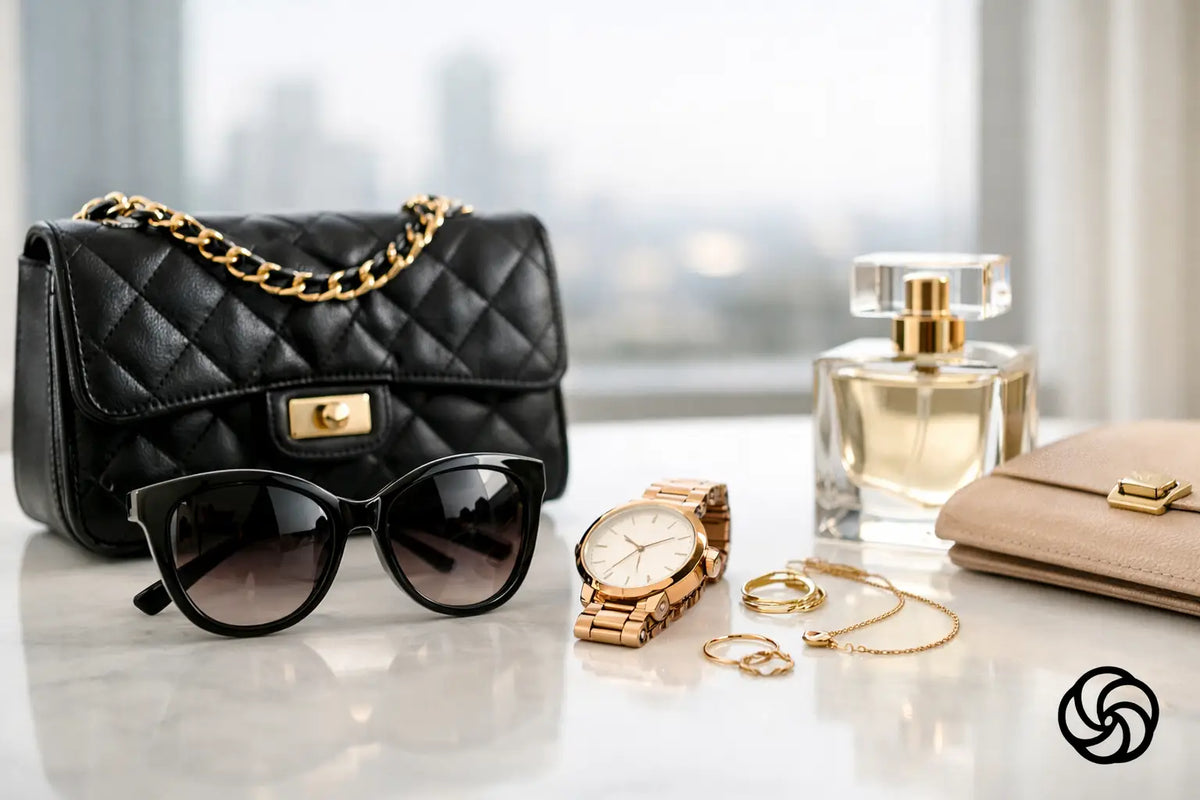
A watch that catches the light at the right angle. A clean chain sitting over a dark collar. Footwear with a sharper silhouette than the rest of the room. Accessible luxury accessories are not about collecting labels or dressing for approval. They are about choosing details that make your presence feel deliberate.
The strongest personal style is rarely built from excess. It comes from proportion, finish, and the confidence to repeat a clear point of view. A well-chosen accessory can turn a simple black shirt, tailored trousers, or off-duty denim into something that looks considered. That is the appeal of luxury-coded design at a price that leaves room to actually live in it.
Why Accessible Luxury Accessories Matter
Traditional luxury often sells distance: limited access, high markups, and the idea that status must be difficult to obtain. Accessible luxury takes a different position. It prioritizes the visual signals that make an accessory feel elevated - clean design, rich tones, dimensional hardware, thoughtful dial work, and a finish that holds attention without asking for it.
That does not mean every piece is interchangeable. Materials, construction, fit, and styling still matter. A gold-tone piece with an awkward profile will not read as refined just because it shines. A watch can have an impressive skeleton dial, but if the case overwhelms the wrist, the effect is lost. The difference is discernment. You are not paying for a name alone. You are selecting the design details that support your image.
For people building a wardrobe in real time, this matters. You may need accessories that work for a client lunch, a rooftop evening, a date, and an ordinary Tuesday. The best pieces do not live in a display box. They become part of your uniform.
The Codes That Make a Piece Look Elevated
Luxury is often less about decoration than restraint. A piece earns its impact when it knows what to leave out. Minimalist jewelry, slim watches, and sculptural footwear all rely on a controlled visual language: one strong focal point, a confident finish, and proportions that look intentional from a distance.
Finish creates the first impression
Color is the first signal. Deep black, polished gold, silver-tone metal, and high-contrast dial details have a natural authority because they are easy to read. They frame the outfit rather than compete with it. Warm gold can bring depth to black, cream, brown, and neutral looks, while silver-toned pieces create a colder, more architectural edge.
A finish should also suit how you dress. If your wardrobe is built around dark monochrome layers, a polished gold chain or watch can be the controlled break in the look. If you wear lighter neutrals and sharp tailoring, silver or steel tones may feel more precise. There is no universal winner. The right choice is the one you can wear repeatedly without forcing the rest of the outfit to adapt.
Proportion separates statement from noise
Bigger is not automatically bolder. A wide ring, oversized pendant, or heavy watch case can be powerful when it balances the wearer and the outfit. It can also feel disconnected when every piece is competing to be noticed.
Start by deciding where you want the eye to land. If the watch is the centerpiece, keep the chain cleaner and the rings more restrained. If you are wearing a bold necklace, let the wrist stay minimal. This is how statement styling stays sharp. Presence comes from control, not from piling on evidence of taste.
Design should carry a point of view
Accessories become memorable when they have identity. That could be a visible movement, an ultra-thin watch profile, a signet-inspired shape, a sculptural buckle, or footwear with a decisive sole. The goal is not novelty for its own sake. The goal is a detail people notice after they have already registered the overall look.
That second look matters. It is what separates a trend-driven purchase from a piece that feels personal. Choose designs that echo the way you want to be seen: precise, composed, daring, understated, or unapologetically direct.
Build a Rotation, Not a Random Collection
A small rotation of accessories with distinct roles will serve you better than a drawer full of one-time purchases. Think in terms of situations rather than rules. You need pieces for daily polish, evening impact, and moments when you want the outfit to do more speaking.
For daily wear, a slim watch, a subtle chain, or a clean ring provides structure without turning a casual look into costume. These are the pieces that make a T-shirt look chosen and a button-down look less predictable. Keep the forms simple, but do not confuse simple with forgettable. A refined clasp, defined texture, or crisp dial can do more than a pile of unnecessary details.
For evenings, increase contrast. A statement bracelet, gold-plated set, skeleton-dial watch, or bolder shoe can create the visual tension a night look needs. One anchor is usually enough. Pairing every statement piece at once can flatten the effect because nothing has room to lead.
For events, use accessories to sharpen the silhouette. The right watch can make a blazer feel more intentional. A clean necklace can open up a dark knit or unbuttoned shirt. Strong footwear can give a restrained outfit its edge. The standard is not whether the piece is flashy. Ask whether it makes the whole look feel more complete.
How to Style Luxury-Inspired Accessories With Restraint
The easiest way to make accessories look expensive is to create space around them. Wear a chain against a plain shirt rather than beneath busy graphics. Let a watch sit cleanly at the wrist instead of fighting a stack of bracelets. Match the metal tones when the outfit is formal or tightly edited, then break that rule only when the contrast is clearly intentional.
Texture can add depth without adding clutter. A matte black jacket, polished metal watch, and smooth leather footwear create contrast through finish, not color. That combination feels composed because every item has a role. Similarly, an all-neutral outfit can carry a stronger piece of jewelry because the clothing is not asking for equal attention.
Fit is part of accessory styling, too. A watch should sit securely without cutting into the wrist. Chains should fall at a length that works with your neckline. Rings should feel substantial, not distracting. Footwear should support your movement and maintain its shape. If a piece looks strong only when you stand still for a photo, it is not serving your real life.
The Trade-Off: Style, Price, and Wearability
Accessible pricing can make experimentation easier, but it does not remove the need for standards. Before choosing a piece, consider how often you will reach for it, what it pairs with, and whether the finish aligns with your lifestyle. A highly polished accessory may demand more care than a brushed finish. Lighter-colored footwear can be striking but less forgiving in daily rotation. A dramatic watch may be perfect after dark but too assertive for a low-key workplace.
There is also a difference between versatile and generic. Versatile pieces work across settings while retaining character. Generic pieces disappear because they have no point of view. Look for the middle ground: designs bold enough to be recognized, clean enough to be repeated.
At VALTRYXX, that balance is the point. The focus is not on borrowing a luxury look for a single occasion. It is on building a visual identity through precise watches, statement jewelry, and footwear made to hold the frame.
Buy With Intention, Wear With Authority
Before adding another accessory to your rotation, picture it with three outfits you already own. If it works only with a hypothetical version of your wardrobe, leave it behind. If it gives your existing staples more shape, contrast, or confidence, it has earned its place.
The right accessory does not need to announce its price. It needs to communicate taste. Choose pieces with a clear silhouette, wear them often enough for them to become yours, and let the details do what they are meant to do: make an ordinary entrance feel controlled, elevated, and unmistakably your own.