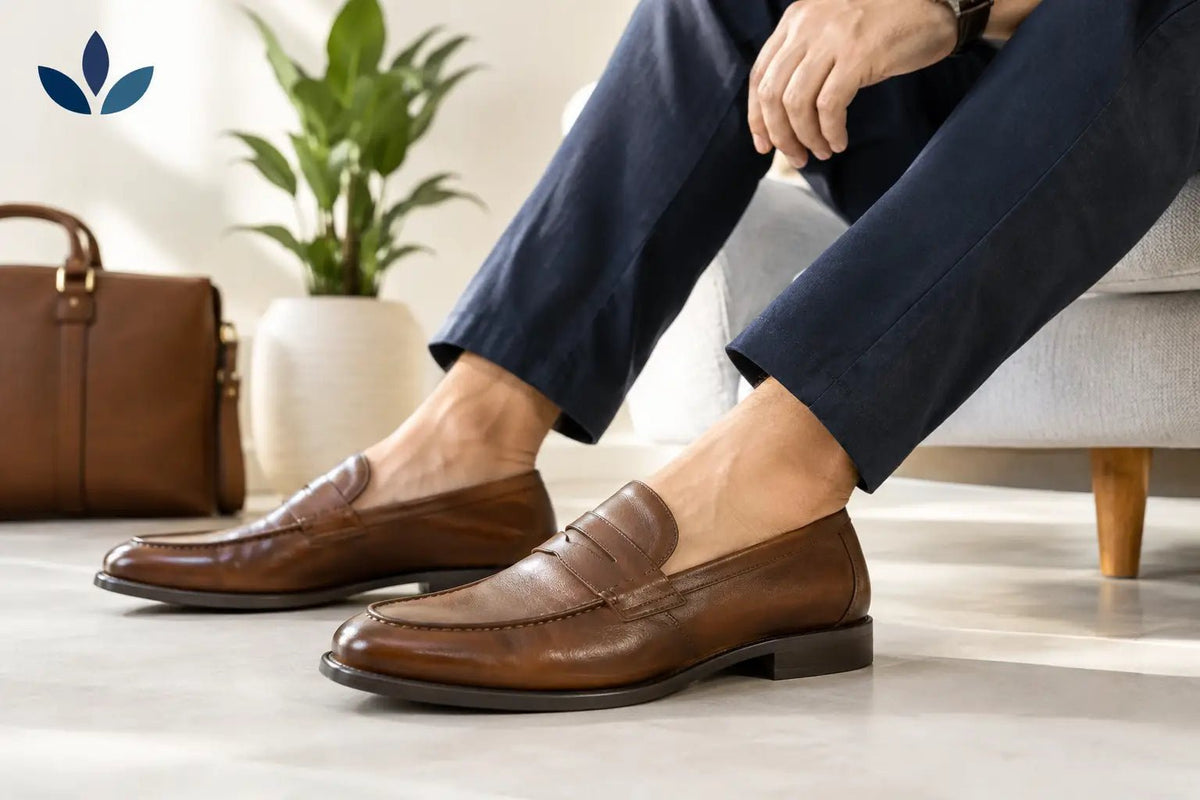
A loafer can look immaculate at 9 a.m. and feel unforgiving by lunch. That is why the real question is not simply, are leather loafers comfortable? It is whether the pair on your feet has the right structure, leather, fit, and purpose for the way you move.
A well-chosen leather loafer can be one of the most comfortable shoes in a refined wardrobe. It offers the ease of a slip-on with more polish than a sneaker, enough presence for the office, dinner, travel, and the spaces in between. But leather loafers are not automatically comfortable straight out of the box. The wrong size or a stiff, low-grade upper can turn a clean silhouette into a long day.
Are Leather Loafers Comfortable? The Honest Answer
Yes, leather loafers can be exceptionally comfortable, especially after they have had time to shape to your foot. Natural leather has a quality synthetic materials rarely match: it gradually relaxes and develops a more personal fit. The shoe becomes less generic with wear and more your own.
That said, comfort depends on construction. A sleek, narrow loafer with a firm sole may look sharper under tailored trousers, but it will not feel like a cushioned running shoe. A softer leather upper, a rounded toe, and a supportive insole are usually better for long periods on your feet.
The trade-off is simple. The more structured and sharply shaped the loafer, the more intentional the fit needs to be. A shoe built for presence still has to move with you.
What Makes a Leather Loafer Feel Good
Leather quality changes everything
Full-grain and top-grain leather tend to feel better over time because they flex naturally rather than fighting every step. They may feel firm initially, particularly across the vamp, but that firmness is not always a problem. It can be the beginning of a better fit.
Cheap corrected leather or heavily coated materials may appear smooth at first, yet they often have less give. Instead of molding around the foot, they can crease harshly, trap heat, and create pressure at the heel or toes. If comfort matters, look beyond surface shine. The leather should feel supple but substantial, not papery or plastic-like.
Suede loafers are often softer from day one and can be an easy choice for casual wear. Smooth leather generally delivers a more formal, defined look and may need a little more break-in time.
The last determines the shape
A shoe last is the form used to create the loafer's shape. You never see it once the shoe is finished, but you feel its effect every time you wear it. A narrow, pointed last creates a stronger fashion statement, while a rounder toe box gives your toes more room to settle naturally.
If your feet run wide, do not expect a narrow loafer to become dramatically wider with use. Leather can ease slightly across the upper, but it will not transform the basic architecture of the shoe. Choose a shape that respects your foot rather than forcing your foot to serve the silhouette.
The sole affects all-day wear
Leather soles look refined and create a clean, traditional profile, but they can feel firmer underfoot and offer less traction on wet pavement. Rubber or mixed soles usually provide more grip and shock absorption, which makes them practical for commuting, travel, and days involving a lot of walking.
There is no single best sole. For a dinner, meeting, or a mostly seated day, a slimmer sole can feel perfectly right. For city blocks, airports, and standing-room events, more cushioning and grip are worth prioritizing.
The insole is where comfort becomes real
A loafer should hold your heel securely without rubbing it. Inside, some padding beneath the heel and forefoot makes a noticeable difference, particularly if you wear the shoe for several hours. A lightly cushioned insole preserves the sleek profile while taking the edge off hard surfaces.
People with high arches may need more support than a minimalist loafer naturally offers. In that case, choose a style with a removable insole or enough interior volume for a thin support insert. Comfort is not compromised by making a smart adjustment. It is strengthened by it.
How Should Leather Loafers Fit?
Loafers do not have laces to correct a loose fit. That makes sizing more exact than many first-time buyers expect. Your heel should stay in place as you walk, with only minimal movement. If it slips noticeably, the shoe is likely too large or too wide through the heel.
Across the top of the foot, the vamp should feel secure rather than restrictive. A new leather loafer can have a close fit, but it should never cause numbness, pinching, or immediate sharp pressure. Do not buy a painfully tight pair hoping it will become comfortable later. Break-in can soften leather. It cannot solve a fundamentally wrong size.
Check the toe area as well. Your longest toe should have a small amount of room ahead of it, and the shoe should not compress the sides of your forefoot. Try loafers later in the day when feet are naturally a little fuller. It is a simple move that prevents an expensive mistake.
Breaking In Leather Loafers Without Ruining Them
The first few wears establish the relationship between shoe and foot. Treat that period with precision. Wear new loafers at home for an hour or two before relying on them for an entire workday or event. Walk on different surfaces, sit, stand, and pay attention to any friction points.
Thin socks can help during the earliest wears, even if you eventually prefer loafers with no-show socks. They reduce rubbing while the upper starts to relax. If a specific area feels tight but not painful, a shoe stretcher or a professional stretch can provide a controlled adjustment.
Avoid soaking leather, blasting it with heat, or using aggressive shortcuts to force a break-in. Those methods can dry the material, distort the shape, and shorten the life of the shoe. Quality leather rewards patience.
When Loafers May Not Be the Most Comfortable Choice
Leather loafers are versatile, not universal. If your day involves extensive walking, heavy lifting, uneven terrain, or long hours standing on concrete, a shoe designed specifically for athletic support may be the better call. Style should project control, not make you endure unnecessary discomfort.
They can also be less ideal in extreme heat if the lining lacks breathability, or during heavy rain if the sole is slick and the leather is untreated. A loafer excels when the setting calls for polished ease. It is not required to do every job in your closet.
Choosing a Pair You Will Actually Wear
The most comfortable loafer is the one that fits the rhythm of your life. If your wardrobe leans tailored and monochrome, a smooth leather penny or bit loafer with a streamlined profile can carry you from work to an evening reservation. If you move through the city all day, favor a softer upper, a roomier toe shape, and a sole with practical grip.
Color matters less to comfort than construction, but it matters to how often you reach for the pair. Black leather delivers a controlled, formal edge. Deep brown adds warmth without losing authority. Either can become a daily uniform when the fit is right.
At VALTRYXX, the strongest pieces are designed around that balance: clean lines, confident shape, and wearability that does not ask you to sacrifice your presence. Luxury, without permission, should still feel good after the first hour.
A leather loafer should not demand attention from your feet all day. Choose the right fit, give quality leather time to adapt, and let the shoe do what great style does best: make an impression while you move freely through the room.