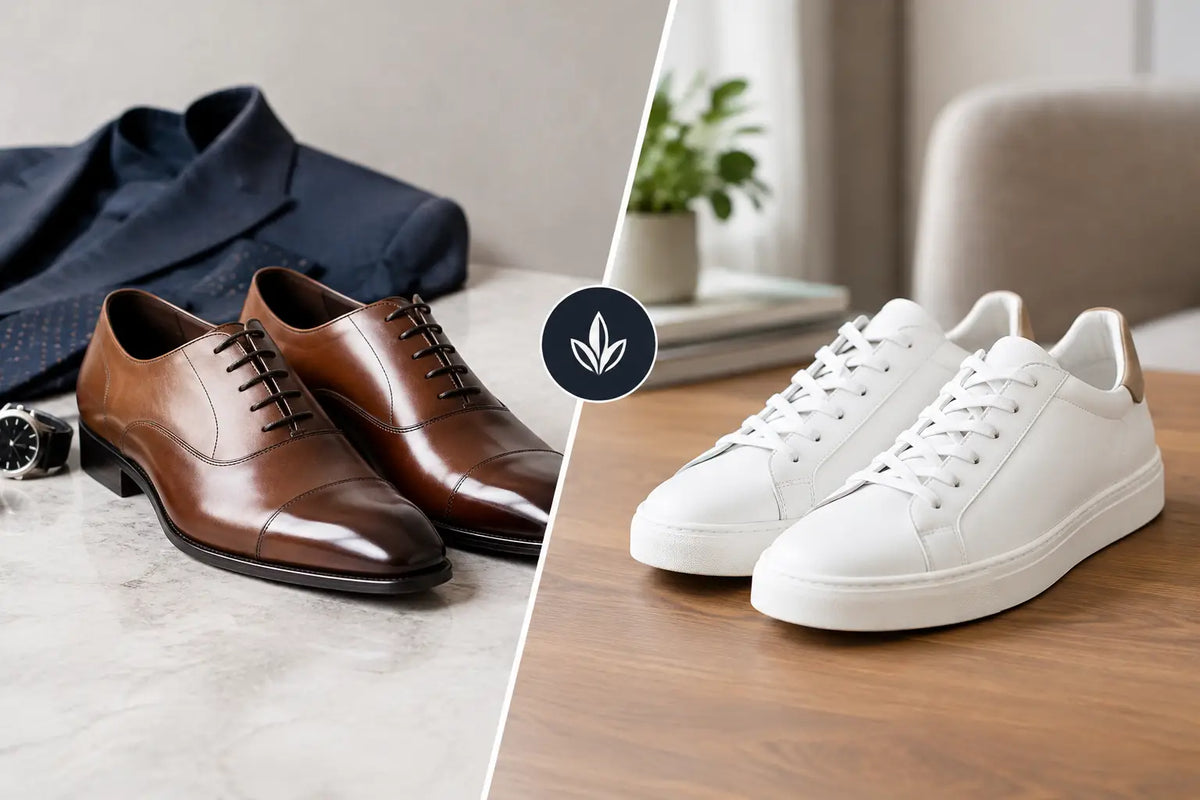
A black leather shoe can make a simple outfit look deliberate. A clean luxury sneaker can make the same outfit feel current, relaxed, and harder to categorize. That is the real tension in dress shoes vs luxury sneakers: not formal versus casual, but tradition versus controlled modernity.
The strongest wardrobes do not treat either option as a default. They use footwear to set the temperature of the entire look. Your shoes decide whether tailoring feels strict or effortless, whether denim looks elevated or merely dressed down, and whether your presence reads polished, creative, powerful, or off-duty.
Dress Shoes vs Luxury Sneakers: The Real Difference
Dress shoes carry authority because their shape is familiar. An Oxford, derby, loafer, or refined ankle boot signals intention before anyone registers the rest of the outfit. Leather construction, a narrow profile, and a clean toe create visual order. They ask for sharper trousers, stronger proportions, and a little more discipline everywhere else.
Luxury sneakers work differently. They retain the comfort and cultural ease of athletic footwear while removing the noise. The best pairs are built around premium-looking materials, minimal branding, balanced soles, and a silhouette that does not compete with your clothes. They make an outfit feel expensive without making it feel overly formal.
Neither is automatically more stylish. Dress shoes can look stiff when they are too shiny, too pointed, or paired with clothes that are too casual. Sneakers can look careless when the sole is bulky, the upper is overdesigned, or the pair is visibly worn down. The difference is restraint.
When Dress Shoes Take Control
Dress shoes are the right move when the room expects structure. Think client meetings, formal dinners, weddings, interviews, gallery events, and evenings where the invitation suggests more than a casual bar. They create a clear line from the ankle upward, especially with tailored pants, dark denim, wool trousers, and clean monochrome layers.
A polished black loafer or lace-up is especially effective when you want the outfit to feel decisive. Pair it with black trousers, a fitted knit, and a minimal watch, and the result is sharp without looking like office uniform. Deep brown leather brings more warmth to navy, charcoal, olive, and cream.
The trade-off is comfort and flexibility. Traditional dress shoes often require a break-in period, thoughtful maintenance, and the right trouser length. They also expose bad fit more quickly. A shoe this precise will not rescue pants that bunch at the hem or a jacket that sits too loose at the shoulder.
That is not a reason to avoid them. It is the reason they have impact. Dress shoes make the details visible.
The Best Dress Shoe Profiles for a Modern Wardrobe
If your style is minimalist, avoid styles with excessive broguing, contrast stitching, heavy ornament, or exaggerated pointed toes. A sleek loafer, plain-toe derby, streamlined Chelsea boot, or low-profile monk strap gives you more range. These designs hold their own with tailoring, but they can also bring definition to straight-leg jeans and a structured overshirt.
Keep color intentional. Black is the cleanest choice for evening, monochrome looks, and formal settings. Dark brown is more adaptable for daytime and textured fabrics. Suede can add depth, though it asks for fair weather and better care. The goal is not to own every variation. It is to own a pair that makes your strongest outfits look even more certain.
When Luxury Sneakers Win
Luxury sneakers are built for the spaces where dress codes have loosened but taste has not. Creative offices, weekend dinners, travel days, rooftops, date nights, and casual events all reward a sneaker that looks refined rather than sporty. The right pair keeps the outfit relaxed while protecting your edge.
A crisp white sneaker is the obvious foundation, but it is not the only answer. Black leather sneakers create a darker, more directional look, especially with black denim, wide-leg trousers, or tonal layers. Gray, taupe, and off-white pairs are equally useful when you want softness without sacrificing polish.
The strongest luxury sneaker has a quiet silhouette. Look for clean panels, a slim or moderately sculpted sole, subtle hardware, and material that holds its shape. A shoe with too many logos, bright accents, or performance details can pull the entire outfit toward gymwear. That may be intentional, but it is not the same as elevated casual style.
Comfort is the obvious advantage, yet it should not be the only reason you choose sneakers. A premium-looking pair works because it lets you move through the day without losing visual control. It can make a tailored coat and relaxed trousers feel modern. It can also make a T-shirt and dark jeans feel finished rather than improvised.
The Rule for Sneakers With Tailoring
Sneakers and tailoring work when both pieces have room to breathe. Choose trousers with a clean break or a slightly cropped hem, not fabric that stacks heavily over the shoe. Keep the sneaker narrow enough to preserve the trouser line. Then reduce formality elsewhere with a knit polo, fine-gauge sweater, open-collar shirt, or relaxed blazer.
Avoid forcing a sneaker into the most formal version of tailoring. If the suit is highly structured, the fabric is glossy, or the occasion is ceremonial, dress shoes still have the advantage. Sneakers are not a substitute for every formal shoe. They are a deliberate shift in tone.
Choose by Setting, Not by Habit
Many people reach for sneakers because they are easy, then reach for dress shoes only when required. That approach leaves style on autopilot. A better question is: what does this setting ask the outfit to communicate?
For a high-stakes professional moment, dress shoes signal respect for the occasion and confidence in the details. For a social setting where you want to look sharp without appearing overdone, luxury sneakers often create the better balance. For travel, sneakers are practical, but a sleek pair keeps you ready for an impromptu dinner or meeting. For a first date, the answer depends on the venue and your personal uniform. A loafer can project more polish. A black or white minimalist sneaker can feel more natural if that is how you actually dress.
Weather matters, too. Leather dress shoes handle a cold, dry evening well, while suede needs protection and attention. Sneakers may be easier for long days on foot, but light-colored pairs lose their authority when they are scuffed or dirty. Clean footwear is not a small detail. It is the baseline.
Build a Rotation That Covers Both
You do not need a wall of shoes to dress with range. Start with one pair of dark dress shoes and one pair of refined sneakers. The dress shoe should be simple enough for dinners, work, and formal events. The sneaker should be minimal enough for denim, trousers, and elevated casual layers.
From there, add based on how you live. If your calendar leans formal, a second dress shoe in a different texture or color adds depth. If you spend more time in relaxed environments, a dark sneaker alongside a light pair gives you options without crowding the closet. The point is coverage, not accumulation.
Accessories should follow the same logic. A slim watch, understated ring, or clean chain can reinforce the direction of the look without turning it into a costume. VALTRYXX approaches footwear and accessories through that same principle: strong silhouette, minimal noise, visible presence.
The Better Choice Is the One That Looks Intentional
Dress shoes bring ceremony, structure, and authority. Luxury sneakers bring movement, ease, and modern restraint. One is not more mature than the other. The wrong choice is simply the shoe that looks disconnected from the room, the outfit, or the person wearing it.
Build enough range to choose with purpose. Then keep every pair clean, well-shaped, and ready to step into the version of the day you want to own.